Real Celebrities Never Die!
OR
Search For Past Celebrities Whose Birthday You Share
Died Age: 54
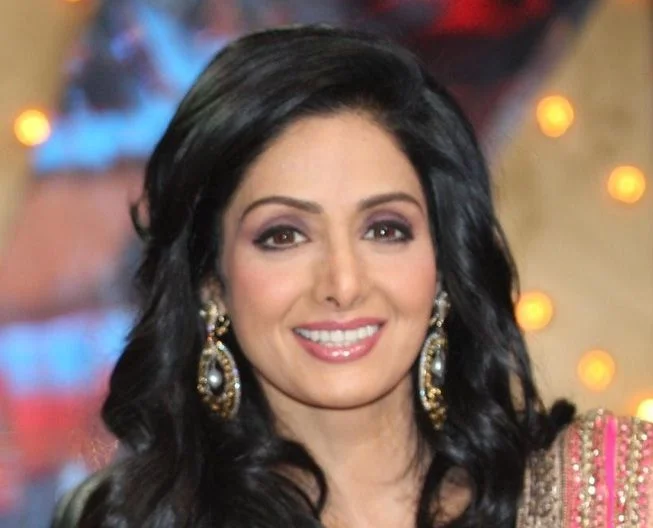
starsunfolded.com
Sridevi
Birthday:
13 Aug, 1963
Date of Death:
24 Feb, 2018
Cause of death:
Accidental Drowning
Nationality:
Indian
Famous As:
Indian actress
Age at the time of death:
54
Shree Amma Yanger Ayyapan's Quote's
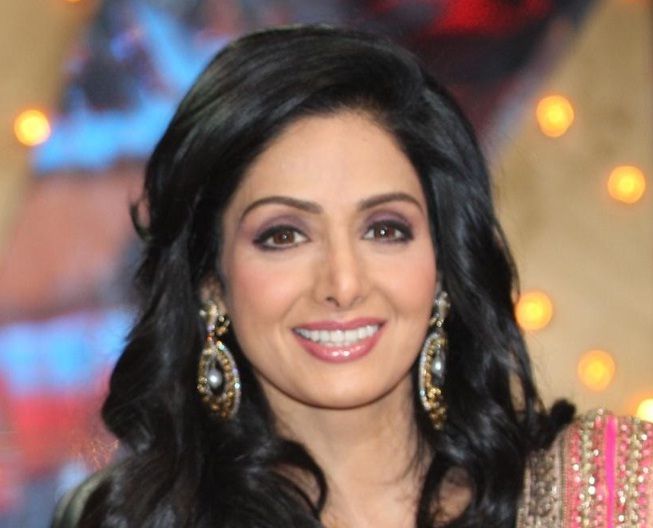
“I had been fortunate that the actors whose films, I used to see with my parents - like Rajesh Khanna sir, Jeetendra sir, Akkini Nageshwara sir , N.T.Rama Rao sir and Sivaji Ganesan sir - I got opportunity to act with them. They were simply great in maintaining their personas and getting into their roles easily.All of them had really great careers. I feel happy about having worked with legends.”
Shree Amma Yanger Ayyapan
🔗 deadcelebrityhub.com
Early Life: A Quiet Flame Begins to Glow
Sridevi wasn’t just a star—she was a phenomenon. With expressive eyes, astonishing versatility, and an uncanny ability to breathe life into every role, she rose from child actor to cinema royalty in a career that defied eras and languages.
Whether making audiences laugh with impeccable comic timing or breaking hearts with a single glance, Sridevi redefined what it meant to be a female superstar in Indian cinema. Her journey was more than a career—it was a cultural force that spanned generations, regions, and styles.
Born as Shree Amma Yanger Ayyapan on August 13, 1963, in Sivakasi, Tamil Nadu, Sridevi grew up in a modest household steeped in tradition. Her father was a lawyer, and her mother played a pivotal role in managing her burgeoning career. There was no grand plan to enter cinema—but fate had its own screenplay.
At just four years old, she appeared in her first film, Thunaivan (1969), as young Lord Muruga. Even in those early moments, the camera seemed to fall in love with her face. Audiences did too. Her talent was instinctive, her expressions already rich with nuance far beyond her years.
By the time she was a teenager, she was acting across Tamil, Telugu, and Malayalam films—often playing adult roles while still attending school. Her childhood, in many ways, was sacrificed at the altar of cinema, but the screen gave her purpose, identity, and eventually, immortality.
Trivia: Sridevi didn’t receive formal acting training. Everything she did—her comic timing, her dramatic depth, her dance mastery—was self-taught, driven by observation and intuition.
Education: A Life Learned on Set
Sridevi’s education happened more on sets than in classrooms. Though she briefly attended school, her early stardom left little room for formal academics. But what she lacked in textbooks, she gained tenfold in experience.
She absorbed direction like a sponge and learned to speak multiple languages through her films—mastering Telugu, Hindi, Malayalam, and Kannada. This linguistic flexibility later became one of her greatest strengths, allowing her to become a pan-Indian icon before the term even existed.
Career Journey: The Rise, The Rule, The Return
Early Stardom: A South Indian Sensation
By the late 1970s, Sridevi had already acted in over 100 films in the South. Her performance in Moondram Pirai (1982)—as a woman with amnesia who regresses to childhood—won her immense critical acclaim and later the Hindi remake (Sadma) earned her a place in Bollywood's consciousness. In these years, she played everything from mythological goddesses to spirited heroines, often outshining male leads with her command of the frame.
Bollywood Reign: The Queen Takes the Throne
It was in the 1980s that Sridevi ascended to undisputed superstardom in Hindi cinema. Films like Himmatwala (1983) made her a mass favorite, while Mr. India (1987) turned her into an icon. Who could forget her "Hawa Hawai" sequence—quirky, glamorous, electric—or her sensual, rain-soaked dance in Kaate Nahi Katte?
But she wasn’t just about spectacle. In Chandni (1989), she exuded grace and romantic depth. In Lamhe (1991), she took on a dual role that was bold for its time—portraying both a mother and daughter with emotional complexity. These films cemented her reputation not just as a star, but as an artist.
Her ability to carry films on her shoulders made her one of the few female leads to command box office success independently—an extraordinary feat in a male-dominated industry.
Trivia: In an era when actresses were often dubbed, Sridevi worked hard to speak her own Hindi lines, eventually becoming fluent and contributing to her seamless crossover success.
Hiatus and Reinvention: The Return of a Legend
After marrying producer Boney Kapoor in 1996 and becoming a mother, Sridevi quietly stepped away from films. For over a decade, she lived a private life, dedicated to her daughters Janhvi and Khushi. But the artist in her never left.
In 2012, she made a breathtaking return with English Vinglish, playing a mild-mannered housewife who enrolls in English classes to reclaim her confidence and dignity. The film was a global success and a poignant reminder of her enduring power. She followed it with Mom (2017), portraying a mother seeking justice with raw intensity and restraint.
Personal Life: Grace Beyond the Screen
Though famously shy in public, Sridevi was warm and fiercely devoted to her family. She married into Bollywood’s storied Kapoor family but carved a separate identity, never trading her spotlight for anyone else's.
Her love for painting was lesser known—she often retreated into canvas and color as a form of quiet expression. Friends described her as deeply sensitive, spiritual, and meticulous—whether planning her daughters’ birthdays or choosing a film script.
Legacy: A Timeless Force of Nature
On February 24, 2018, the world was stunned by her sudden passing in Dubai. At just 54, Sridevi left behind a legacy as vast as it was profound. India mourned not just an actress, but an era. From politicians to peers to fans across generations, tributes poured in: she had been their first screen crush, their idol, their teacher in the art of emotion.
She wasn’t just a superstar—she was the superstar. Not defined by one language, genre, or time, Sridevi was a national treasure who made acting look effortless and stardom look graceful.
Today, young actresses cite her as an inspiration. Film schools analyze her performances. Audiences still watch Sadma, Chandni, or English Vinglish with tears and awe. Her daughters carry her legacy forward, but Sridevi’s place is singular—etched in cinematic eternity.
Conclusion: The Star Who Never Set
Sridevi’s journey was one of brilliance forged through quiet perseverance. She danced, wept, laughed, and loved on screen in a way few ever have. Her career was a mirror of Indian cinema’s own evolution—from melodrama to realism, from grandeur to nuance.
And like the rarest of stars, she didn’t just shine—she illuminated. For every dreamer, every girl told to wait her turn, every artist who dares to come back after silence, Sridevi remains the embodiment of possibility.
In the theater of time, her name will always be on the marquee.
Profile Snapshot
Name:
Shree Amma Yanger Ayyapan
Popular Name:
Sridevi
Gender:
Female
Cause of Death:
Accidental Drowning
Spouse:
Boney Kapoor
Place of Birth:
Meenampatti, Madras, India
Place of Death:
Dubai, United Arab Emirates
Occupation / Profession:
Indian actress
Personality Type
Advocate: Sridevi was a deeply empathetic and intuitive artist, whose performances resonated with audiences, reflecting her insightful and idealistic nature.
Shree Amma Yanger Ayyapan's Interesting Facts
Known for her versatility, she delivered iconic performances in films like Mr. India, Chandni, and Sadma, blending comedy, drama, and dance with ease.
She began acting at the age of 4 and made her Bollywood breakthrough with the film Himmatwala (1983), which catapulted her to national fame.
Sridevi made a celebrated comeback with English Vinglish in 2012, reminding audiences of her unmatched screen presence before her untimely death in 2018.
Sridevi was often called India’s first female superstar, with a career spanning five decades across Tamil, Telugu, Hindi, Malayalam, and Kannada cinema.
Achievements & Awards
Sridevi, one of India's most iconic actresses, won the National Film Award for Best Actress in 2018 for her role in Mom.
Throughout her career, she earned several Filmfare Awards and was honored with the Padma Shri, one of India’s highest civilian awards, for her contributions to Indian cinema.
External Links