Real Celebrities Never Die!
OR
Search For Past Celebrities Whose Birthday You Share
Died Age: 50

npr.org
Stieg Larsson
Birthday:
15 Aug, 1954
Date of Death:
09 Nov, 2004
Cause of death:
Heart Attack
Nationality:
Swedish
Famous As:
Journalist
Age at the time of death:
50
Karl Stig-Erland Larsson's Quote's

“Everyone has secrets. It's just a matter of finding out what they are.”
Karl Stig-Erland Larsson
🔗 deadcelebrityhub.com
Early Life: A Boy Raised by the Stars and Snow
Stieg Larsson was a man fueled by a relentless pursuit of justice. Known to millions as the mind behind The Girl with the Dragon Tattoo, Larsson didn’t live to witness his literary triumph. But behind the worldwide phenomenon of Lisbeth Salander lay a life of fierce activism, investigative journalism, and a deep-rooted commitment to exposing the dark underbelly of power. His story is not just that of a writer—it’s that of a lifelong fighter armed with words instead of weapons.
Born on August 15, 1954, in the remote town of Skelleftehamn in northern Sweden, Karl Stig-Erland Larsson—later stylised as Stieg—was whisked away from urban life at an early age. His parents, struggling with the costs of raising a child in the city, sent young Stieg to live with his grandparents in the forested Västerbotten region. There, in a modest countryside cabin with no running water, Larsson grew up surrounded by snowdrifts, fox tracks, and old war stories.
His grandfather, a socialist and vocal anti-fascist who had opposed Hitler during World War II, became one of the most profound influences on Larsson’s worldview. The boy who listened wide-eyed to tales of resistance would one day dedicate his life to confronting modern-day fascism with the same moral clarity. This early exposure to ideological struggle lit a flame in him that would never extinguish.
Education: A Mind Forged in Protest
Larsson’s education was less a traditional academic path and more a journey through political awakening. He studied at Umeå University, focusing loosely on sociology and politics, though he never completed a formal degree. He was too restless for the classroom and too drawn to activism.
By his early twenties, he was deeply involved in Sweden’s far-left political movements. He travelled to Africa in the late 1970s to train Marxist guerrillas in Eritrea, though malaria soon forced his return. His time abroad, however, sharpened his views on colonialism, power, and global inequality. It was an education in real-world conflict far more formative than any lecture hall.
Career Journey: From Political Firebrand to Literary Phenomenon
The Early Years: Journalism with Teeth
Larsson’s professional career began in journalism, but not the soft-focus kind. He co-founded Expo magazine in 1995, a Swedish anti-racist and anti-fascist publication committed to investigating and exposing right-wing extremism. At a time when most of the media turned a blind eye, Expo named names and dug deep.
This work earned him a spot on neo-Nazi hit lists. Larsson lived under constant threat, often carrying his own trash to avoid being tracked. Yet, he refused police protection. He believed that silence was more dangerous than confrontation. His courage and the depth of his research made him one of Sweden’s most formidable investigative journalists.
The Turning Point: A Hidden Manuscript
Unbeknownst to even his closest colleagues, Larsson was quietly working on a side project, a series of crime novels centred around a troubled hacker named Lisbeth Salander and a disillusioned journalist, Mikael Blomkvist. Inspired by Pippi Longstocking and his own experiences as a journalist, the trilogy was his attempt to marry thriller fiction with the political themes he’d spent his life exploring: misogyny, corruption, abuse of power.
In 2004, he delivered the manuscripts for what would become the Millennium Trilogy to a Swedish publisher. Then, just months later, Larsson collapsed from a heart attack and died at the age of 50. He never saw the impact his books would have on the world.
Posthumous Stardom: A Legacy on Fire
The first book, The Girl with the Dragon Tattoo, published in 2005, became an instant sensation. Dark, intricate, and unflinching, it introduced readers to a new kind of heroine and a new kind of crime fiction. The series sold over 100 million copies worldwide, was translated into 40 languages, and inspired multiple film adaptations.
Lisbeth Salander, who was fierce, brilliant, and vengeful, was unlike any character in modern literature. She embodied the rage of women silenced by institutions and celebrated resilience in its most radical form. Through her, Larsson gave voice to victims, challenged patriarchy, and told the stories mainstream thrillers too often ignored.
Personal Life: Quiet Loyalty in the Shadows
For over 30 years, Larsson was in a committed relationship with architect and political activist Eva Gabrielsson. The two shared a bond over their shared values and fight for justice. They never married—a decision made in part for her safety, given the threats against him.
A heavy smoker and night owl, Larsson often fueled his writing with endless cups of coffee, sometimes working 20-hour days. Friends described him as tireless, humble, and always late, often seen sprinting to meetings with papers falling out of his briefcase.
Legacy: A Life That Fought Back
Stieg Larsson didn’t live to bask in the glow of literary fame. But in many ways, he might not have cared. He wrote not for applause but to expose, to resist, and to tell the truth. His books were never just thrillers, they were warnings, critiques, and call-to-arms.
Today, Larsson is remembered as a storyteller who made injustice visible. He stood against fascism not only with articles and exposés but with unforgettable fiction. His legacy is not just on the bestseller lists but in the courage of his convictions and the stories that continue to echo his fight.
In the end, Larsson proved that the pen is not just mightier than the sword but deadlier, more enduring, and, in the right hands, revolutionary.
Profile Snapshot
Name:
Karl Stig-Erland Larsson
Popular Name:
Stieg Larsson
Gender:
Male
Cause of Death:
Heart Attack
Spouse:
Eva Gabrielsson
Place of Birth:
Skelleftehamn, Sweden
Place of Death:
Stockholm, Sweden
Occupation / Profession:
Journalist
Writer
Personality Type
Advocate: Stieg Larsson was a quiet visionary and tireless idealist who used the written word as both sword and shield in his lifelong battle against injustice.
Karl Stig-Erland Larsson's Interesting Facts
He once missed a deadline for his journalism work because he stayed up all night playing a video game.
He was so secretive about his novels that even close friends didn’t know he was writing them until after his death.
Larsson originally wrote the entire Millennium Trilogy without a publishing contract—just for himself.
Achievements & Awards
Beyond fiction, his pioneering investigative work with Expo magazine made him one of Sweden’s most respected voices against right-wing extremism.
He was also honoured with multiple international crime fiction accolades, and Time Magazine listed him among the 100 most influential people in the world in 2010.
His first novel, The Girl with the Dragon Tattoo, won the Glass Key Award for best Nordic crime novel in 2006.
Stieg Larsson achieved posthumous global fame with his Millennium Trilogy, which sold over 100 million copies worldwide and was translated into more than 40 languages.
External Links
Additional Links
https://www.brainyquote.com/authors/stieg-larsson-quoteshttps://www.npr.org/2010/06/03/127402867/stieg-larsson-the-man-who-wrote-the-girl-whohttps://www.theguardian.com/books/2024/nov/04/stieg-larsson-double-life-anti-far-right-activisthttps://www.vanityfair.com/culture/2011/07/stieg-larsson-201107 https://www.bbc.co.uk/programmes/b03kqg07
Latest Profiles
People also viewed
July 11, 1899
Born11 Jul, 1899
Died01 Oct, 1985
NationalityAmerican
Age at time of death86
Dale Carnegie
Born24 Nov, 1888
Died01 Nov, 1955
NationalityAmerican
Age at time of death66
Zora Neale Hurston
Born07 Jan, 1891
Died28 Jan, 1960
NationalityAmerican
Age at time of death69
Clarice Lispector
Born10 Dec, 1920
Died09 Dec, 1977
NationalityBrazilian
Age at time of death56
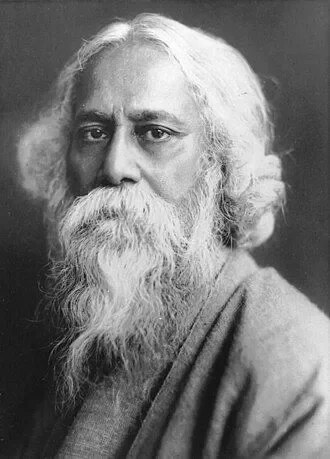
Rabindranath Tagore
Born07 May, 1861
Died08 Aug, 1941
NationalityIndian
Age at time of death80
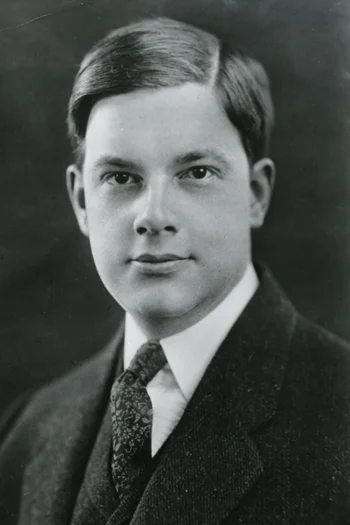
Joyce Kilmer
Born06 Dec, 1886
Died30 Jul, 1918
NationalityAmerican
Age at time of death31
Cicely Saunders
Born22 Jun, 1918
Died14 Jul, 2005
NationalityEnglish
Age at time of death87
Joseph Pilates
Born09 Dec, 1883
Died09 Oct, 1967
NationalityGerman
Age at time of death83
Mark Twain
Born30 Nov, 1835
Died21 Apr, 1910
NationalityAmerican
Age at time of death74
Jules Verne
Born08 Feb, 1828
Died24 Mar, 1905
NationalityFrench
Age at time of death77
Jack Welch
Born19 Nov, 1935
Died01 Mar, 2020
NationalityAmerican
Age at time of death84
Rajendra Prasad
Born03 Dec, 1884
Died28 Feb, 1963
NationalityIndian
Age at time of death78
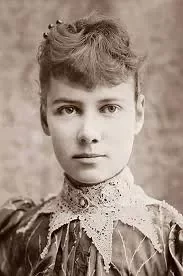
Nellie Bly
Born05 May, 1864
Died27 Jan, 1922
NationalityAmerican
Age at time of death57
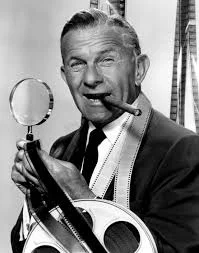
George Burns
Born20 Jan, 1896
Died09 Mar, 1996
NationalityAmerican
Age at time of death100

Ethan Allen
Born21 Jan, 1738
Died12 Feb, 1789
NationalityAmerican
Age at time of death51
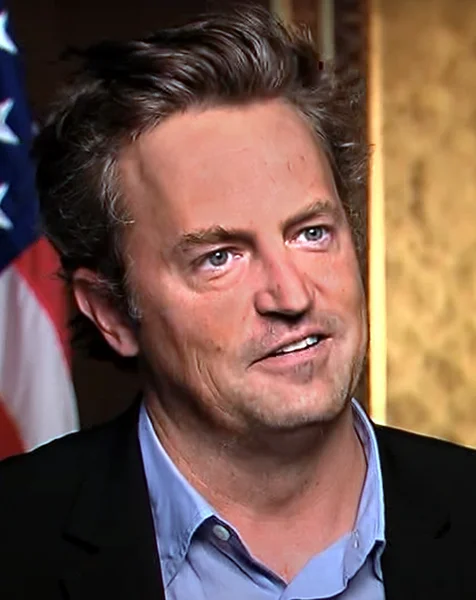
Matthew Perry
Born19 Aug, 1969
Died28 Oct, 2023
NationalityAmerican, Canadian
Age at time of death54
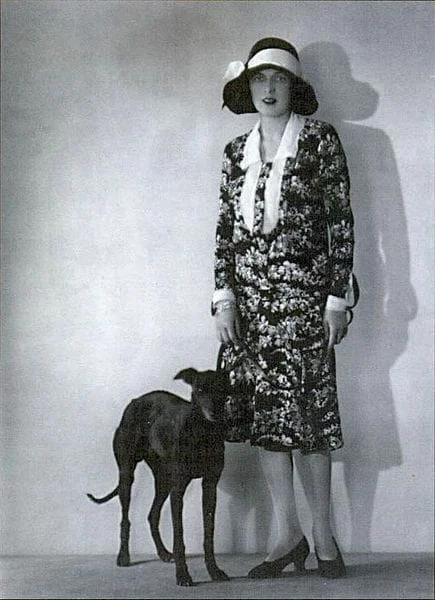
Caresse Crosby
Born20 Apr, 1891
Died24 Jan, 1970
NationalityAmerican
Age at time of death78
Will Durant
Born05 Nov, 1885
Died07 Nov, 1981
NationalityAmerican
Age at time of death96
Les Dawson
Born02 Feb, 1931
Died10 Jun, 1993
NationalityBritish
Age at time of death62
James Allen
Born28 Nov, 1864
Died24 Jan, 1912
NationalityBritish
Age at time of death47