Real Celebrities Never Die!
OR
Search For Past Celebrities Whose Birthday You Share
Died Age: 101
en.wikipedia.org
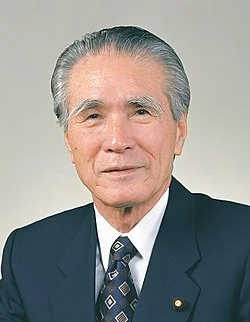
Tomiichi Murayama
Birthday:
02 Mar, 1924
Date of Death:
16 Oct, 2025
Cause of death:
Senility
Nationality:
Japanese
Famous As:
Japanese politician
Age at the time of death:
101
Tomiichi Murayama's Quote's

“We must never forget the lessons of history and the pain that war brings.”
Tomiichi Murayama
🔗 deadcelebrityhub.com
Early Life: A Childhood Shaped by the Sea
Tomiichi Murayama was a humble yet resolute statesman—an unexpected prime minister whose moral clarity helped redefine Japan’s postwar identity. Rising from modest beginnings, he became the political figure who brought the nation’s conscience to the forefront, delivering the historic apology that shaped Japan’s stance toward peace and responsibility.
Born in a fishing village in Ōita Prefecture in 1924, Murayama grew up surrounded by hard-working families who lived by tides, storms, and the strength of their own hands. His father was a fisherman, and young Tomiichi learned early the values of perseverance and humility.
World War II arrived when he was still young, and he experienced the final years of the conflict firsthand. These memories left a deep impression on him—a recognition of the suffering war brings and of the responsibility leaders bear. After the war, he returned to a country rebuilding itself from ashes, determined to contribute to a more peaceful future.
Education: Shaped by Experience and Community
Murayama attended Meiji University in Tokyo, studying political economy. But his true education came from the world he returned to after graduation. Back in Ōita, he became active in the local fishermen’s union, standing alongside workers who lacked political power but possessed strong community values.
This connection to labor movements grounded him. It taught him that leadership meant listening, advocating, and understanding the struggles of everyday people—principles that guided his entire political career.
Early Career: From Local Councils to National Politics
Murayama’s political journey began at the local level. He served on the city council, then in the prefectural assembly, proving himself a steady and principled voice. His commitment to social welfare and labor rights resonated with voters, and by the early 1970s, he entered national politics as a representative of the Japan Socialist Party.
He spent decades in parliament, known more for his reliability than for grandstanding. He wasn’t a flamboyant politician; he was the kind who earned respect quietly, through patience, thoughtfulness, and integrity.
Rise to Leadership: An Unlikely Prime Minister
In 1994, political upheaval created an unexpected opening. Murayama became leader of his party—and soon after, he was chosen as prime minister at the head of an unusual coalition. Few expected a Socialist prime minister during that era, much less one who approached leadership without ego or theatricality.
Murayama brought what he called “people-centered politics”: a commitment to honesty, humility, and responsibility. His premiership would be brief but historically significant.
Major Achievements: A Voice of Remorse and Responsibility
The defining moment of Murayama’s leadership came on the 50th anniversary of the end of World War II. In a moment of solemn clarity, he delivered a national statement expressing deep remorse and a heartfelt apology for Japan’s wartime aggression and the suffering it caused across Asia.
This “Murayama Statement” became a landmark in Japan’s modern history—a gesture of accountability that resonated far beyond its borders. It remains one of the most important expressions of postwar reconciliation by a Japanese leader.
His time in office was also marked by two major domestic crises: a catastrophic earthquake and a terrorist attack that shocked the nation. While his administration faced criticism for its response, Murayama confronted these events with sincerity and a sense of duty, reinforcing his belief that leadership required humility, not bravado.
Later Career: A Guardian of Peace and Memory
After stepping down in 1996, Murayama stayed active in politics, guiding his party through transition and continuing to speak out on issues of peace, social justice, and historical responsibility.
Even long into retirement, he defended the importance of acknowledging the past. When political voices later questioned Japan’s wartime apologies, Murayama stood firm, insisting that accepting responsibility was essential for a peaceful future.
Personal Life: The Quiet Strength Behind the Statesman
Although he reached the nation’s highest office, Murayama remained a modest man rooted in his upbringing. He kept close ties to his hometown, often returning to the communities that shaped him. Those who worked with him remembered his kindness, his attentiveness, and his sincere respect for others—traits rare in politics and deeply felt by those around him.
Legacy: A Leader Who Chose Humility Over Power
Tomiichi Murayama’s legacy rests not on political triumphs, but on moral courage. He was the leader who said what many before him avoided: that acknowledging the truth of history is the path toward reconciliation, not weakness.
He is remembered today as a gentle but resolute statesman—a figure who rose from small-town roots to deliver one of Japan’s most significant statements of peace. His life stands as a reminder that leadership, at its best, is an act of conscience, not ambition.
Tomiichi Murayama remains a symbol of humility, honesty, and the power of acknowledging the past to build a more compassionate future.
Profile Snapshot
Name:
Tomiichi Murayama
Popular Name:
Tomiichi Murayama
Gender:
Male
Cause of Death:
Senility
Spouse:
Yoshie Murayama
Place of Birth:
Ōita, Japan
Place of Death:
Ōita, Japan
Occupation / Profession:
Japanese politician
Personality Type
Advocate: Tomiichi Murayama seems to have been a conscientious, empathetic and socially minded leader — someone driven by moral responsibility and a desire for reconciliation, combining political pragmatism with a commitment to healing and unity.
Tomiichi Murayama's Interesting Facts
Tomiichi Murayama served as Japan’s Prime Minister from 1994 to 1996 and was the first Socialist Party leader to hold the position in decades.
He is known for his 1995 statement expressing deep remorse for Japan’s actions during World War II, particularly in Asia.
Murayama played a key role in forming a coalition government between the Socialist Party, the Liberal Democratic Party, and the New Party Sakigake.
Before becoming Prime Minister, he spent over 30 years in politics, rising through the ranks of the Japan Socialist Party.
Achievements & Awards
Tomiichi Murayama, former Prime Minister of Japan (1994–1996), is best known for his efforts in promoting peace and reconciliation. He received international recognition for his apology over Japan’s wartime actions and for fostering diplomatic relations, including awards highlighting his commitment to peace and social harmony.
His achievements focus more on diplomacy and moral leadership than on conventional awards.
External Links
Latest Profiles
People also viewed
Shinzo Abe
Born21 Sep, 1954
Died08 Jul, 2022
NationalityJapanese
Age at time of death67