Real Celebrities Never Die!
OR
Search For Past Celebrities Whose Birthday You Share
Died Age: 90
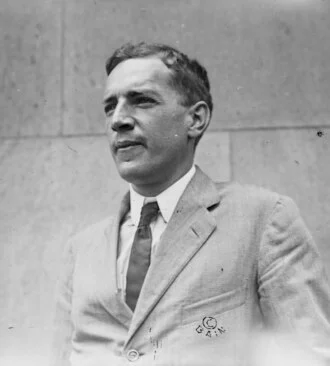
wikimedia.org
Upton Sinclair
Birthday:
19 Sep, 1878
Date of Death:
25 Nov, 1968
Cause of death:
Natural death
Nationality:
American
Famous As:
Activist
Age at the time of death:
90
Upton Beall Sinclair Jr.'s Quote's

“In the twilight, it was a vision of power.”
Upton Beall Sinclair Jr.
🔗 deadcelebrityhub.com
Early Life and Political Awakening
Upton Sinclair was a writer with a mission—a man whose words ignited change and exposed the harsh realities of American industry. His work didn’t just entertain; it challenged, shocked, and ultimately reshaped public policy. A lifelong advocate for social justice, Sinclair’s fearless writing left a lasting mark on history. Born into a struggling Baltimore family in 1878, Sinclair experienced both poverty and privilege. His father’s alcoholism kept the family in financial distress, but thanks to his wealthy maternal relatives, Sinclair spent part of his childhood in comfort. This contrast deeply influenced his perspective on class struggles. He enrolled at Columbia University to study law but found himself more drawn to literature and radical political thought. Inspired by Karl Marx, Jack London, and Edward Bellamy, he embraced socialism and joined the Socialist Party of America. Writing for socialist newspapers and magazines, Sinclair became a vocal critic of capitalism’s excesses.
Career : Exposing the Meatpacking Industry
In 1904, Sinclair was sent to Chicago to investigate the meatpacking industry for a socialist magazine. For weeks, he immersed himself in the stockyards and slaughterhouses, witnessing first-hand the exploitation of immigrant workers and the appalling hygiene conditions. What he uncovered was more than a labor issue—it was a national scandal. His findings first appeared in a series of articles but soon took the form of a novel: The Jungle. The book was so graphic and unsettling that multiple publishers rejected it. Determined to get his message out, Sinclair financed a private printing before Doubleday finally published it in 1906.
A Nation in Shock
The Jungle stunned the American public. Readers were outraged—not just by the treatment of workers but by the horrifying conditions under which their food was prepared. The uproar reached the White House, catching the attention of President Theodore Roosevelt. The ensuing federal investigation confirmed Sinclair’s descriptions, leading to the passage of the Pure Food and Drug Act and the Meat Inspection Act in 1906, two landmark laws that still govern food safety today. Ironically, Sinclair lamented that his readers focused more on tainted meat than on the suffering of workers. “I aimed at the public’s heart,” he famously said, “and by accident, I hit it in the stomach.”
A Lifelong Commitment to Reform
Undeterred, Sinclair continued his crusade for social justice, writing over 90 books addressing issues from labor rights to political corruption. His Lanny Budd series won the Pulitzer Prize, and he even ran for office multiple times, most notably in California’s 1934 gubernatorial race under the banner of the End Poverty in California (EPIC) movement.
Legacy and Impact
Sinclair remained a dedicated writer and activist until his death in 1968. His work reshaped industries, influenced policy, and inspired generations of reformers. A fearless advocate for change, Upton Sinclair proved that words have the power to transform society—not just to reflect it.
Profile Snapshot
Name:
Upton Beall Sinclair Jr.
Popular Name:
Upton Sinclair
Gender:
Male
Cause of Death:
Natural death
Spouse:
Meta Fuller
Mary Craig Kimbrough
Mary Elizabeth Willis
Place of Birth:
Baltimore, Maryland, U.S.
Place of Death:
Bound Brook, New Jersey, U.S.
Occupation / Profession:
Activist
Journalist
Novelist
Political
Politician
Writer
Personality Type
Campaigner Enthusiastic, creative and sociable free spirits, who can always find a reason to smile. Open-minded people who are able to distinguish themselves from the crowd thanks to their upbeat personality.
Upton Beall Sinclair Jr.'s Interesting Facts
He ran twice for U.S. Congress and lost both times
His book caused Congress to regulate the meat industry with the Meat Inspection Act and the Pure Food and Drug Act.
His Lanny Budd series was translated into 21 languages
Sinclair worked seven weeks in one of Chicago’s meatpacking plants and spent six months investigating the industry as research for his book The Jungle
Achievements & Awards
His book The Jungle caused Congress to implement the Meat Inspection Act and the Pure Food and Drug Act.
External Links
Additional Links
https://allfamousbirthday.com/upton-sinclair/https://manoflabook.com/wp/fun-facts-friday-upton-sinclair/https://www.16personalities.com/enfp-personalityhttps://www.biography.com/writer/upton-sinclairhttps://www.brainyquote.com/authors/upton-sinclair-quoteshttps://www.britannica.com/biography/Upton-Sinclair
Latest Profiles
People also viewed
July 11, 1899
Born11 Jul, 1899
Died01 Oct, 1985
NationalityAmerican
Age at time of death86
Dale Carnegie
Born24 Nov, 1888
Died01 Nov, 1955
NationalityAmerican
Age at time of death66

Samuel Beckett
Born13 Apr, 1906
Died22 Dec, 1989
NationalityIrish
Age at time of death83
Zora Neale Hurston
Born07 Jan, 1891
Died28 Jan, 1960
NationalityAmerican
Age at time of death69
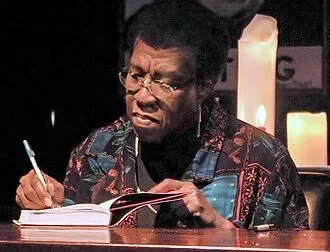
Octavia Butler
Born22 Jun, 1947
Died24 Feb, 2006
NationalityAmerican
Age at time of death58

Clarice Lispector
Born10 Dec, 1920
Died09 Dec, 1977
NationalityBrazilian
Age at time of death56
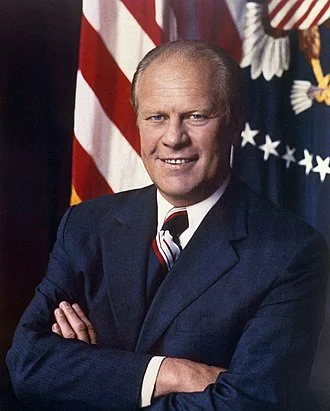
Gerald Ford
Born14 Jul, 1913
Died26 Dec, 2006
NationalityAmerican
Age at time of death93
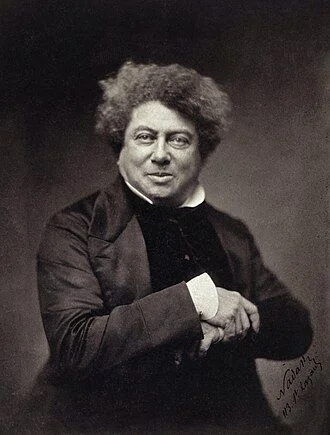
Alexandre Dumas
Born24 Jul, 1802
Died05 Dec, 1870
NationalityFrench
Age at time of death68
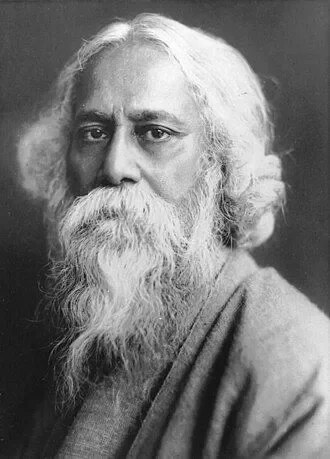
Rabindranath Tagore
Born07 May, 1861
Died08 Aug, 1941
NationalityIndian
Age at time of death80

Olivia Newton-John
Born26 Sep, 1948
Died08 Aug, 2022
NationalityBritish, Australian
Age at time of death73
George Trow
Born28 Sep, 1943
Died24 Nov, 2006
NationalityAmerican
Age at time of death63
Joyce Kilmer
Born06 Dec, 1886
Died30 Jul, 1918
NationalityAmerican
Age at time of death31
Marlon Brando
Born03 Apr, 1924
Died01 Jul, 2004
NationalityAmerican
Age at time of death80

Guy de Maupassant
Born05 Aug, 1850
Died06 Jul, 1893
NationalityFrench
Age at time of death42

Cicely Saunders
Born22 Jun, 1918
Died14 Jul, 2005
NationalityEnglish
Age at time of death87
Victor Hugo
Born26 Feb, 1802
Died22 May, 1885
NationalityFrench
Age at time of death83
Joseph Pilates
Born09 Dec, 1883
Died09 Oct, 1967
NationalityGerman
Age at time of death83
George Murphy
Born04 Jul, 1902
Died03 May, 1992
NationalityAmerican
Age at time of death89
P. T. Barnum
Born05 Jul, 1810
Died07 Apr, 1891
NationalityAmerican
Age at time of death80
Nina Simone
Born21 Feb, 1933
Died21 Apr, 2003
NationalityAmerican
Age at time of death70