Real Celebrities Never Die!
OR
Search For Past Celebrities Whose Birthday You Share
Died Age: 71
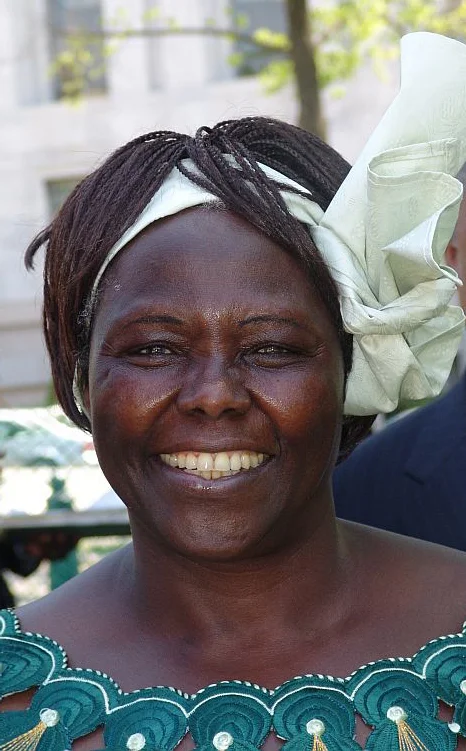
wikimedia.org
Wangari Maathai
Birthday:
01 Apr, 1940
Date of Death:
25 Sep, 2011
Cause of death:
Complications arising from ovarian cancer
Nationality:
Kenyan
Famous As:
Environmentalist
Age at the time of death:
71
Wangari Muta Maathai's Quote's

“We are fond of blaming the poor for destroying the environment. But often it is the powerful, including governments, that are responsible.”
Wangari Muta Maathai
🔗 deadcelebrityhub.com
Early Life & Education
Wangari Maathai was a force of nature—both in her relentless activism and in her fight to heal the land she called home. A pioneering environmentalist, human rights advocate, and Nobel laureate, she dedicated her life to empowering women, restoring ecosystems, and challenging oppression. Through her visionary Green Belt Movement, she proved that planting trees could be an act of both environmental renewal and political resistance. Born in 1940 in the rural village of Ihithe, Kenya, Maathai grew up surrounded by lush landscapes, an upbringing that fostered her deep connection to nature. She was a bright and determined student, and in 1960, her academic excellence earned her a scholarship as part of the “Kennedy Airlift” program, allowing her to study in the United States. At Mount St. Scholastica College in Kansas, she earned a degree in biology before pursuing a master’s in biological sciences at the University of Pittsburgh. It was during her time in the U.S. that she was first introduced to the growing environmental movement—an awakening that would later shape her mission. When she returned to Kenya, Maathai shattered barriers. In 1971, she became the first woman in East and Central Africa to earn a doctorate, completing a PhD in veterinary anatomy at the University of Nairobi. She was not just breaking academic ground; she was also stepping into a world where women were rarely given a voice in politics or science.
Career & Legacy
In 1977, driven by a vision of environmental restoration and community empowerment, Maathai founded the Green Belt Movement. What began as a simple tree-planting initiative to combat deforestation soon evolved into a powerful grassroots movement, mobilizing thousands of women to reclaim degraded land and advocate for their rights. But planting trees was only part of the story—the movement also became a challenge to Kenya’s authoritarian regime, which viewed environmental activism as a threat to its power. President Daniel arap Moi’s government saw Maathai as a disruptor, and she faced arrests, harassment, and even physical assaults for her defiance. Yet, she remained undeterred. Her bravery earned her international recognition, and in 2004, Maathai made history as the first African woman and the first environmentalist to be awarded the Nobel Peace Prize. The honor was a testament not only to her fight for sustainable development but also to her unwavering belief that peace, democracy, and environmental conservation were deeply intertwined. Even as she battled ovarian cancer in her later years, Maathai continued to champion the causes she held dear. She passed away in 2011 at the age of 71, leaving behind a legacy that stretches far beyond the forests she helped revive. Today, the Green Belt Movement continues to flourish, and her pioneering work remains an inspiration for environmental activists and changemakers across the world. Wangari Maathai proved that a single seed—whether a tree or an idea—has the power to transform landscapes, communities, and even history.
Profile Snapshot
Name:
Wangari Muta Maathai
Popular Name:
Wangari Maathai
Gender:
Female
Cause of Death:
Complications arising from ovarian cancer
Spouse:
Mwangi Maathai
Place of Birth:
Ihithe, Tetu, Kenya
Place of Death:
Nairobi, Kenya
Occupation / Profession:
Environmentalist
Political activist
Writer
Personality Type
Advocate Quiet and mystical, yet very inspiring and tireless idealists. Creative and insightful people who have strong beliefs and values especially when it comes to ethics.
Wangari Muta Maathai's Interesting Facts
She was the first ever female professor in Kenya.
She was the founder of the Green Belt Movement.
Wangari Maathai was the first black African as well as the first environmentalist to win the Nobel Peace Prize.
Achievements & Awards
Maathai won the Right Livelihood Award in 1984
She was awarded the Nichols-Chancellor’s Medal by Vanderbilt University in 2011
She won the Goldman Environmental Prize in 1991
She won the World Citizenship Award in 2007
Wangari Maathai won the Nobel Peace Prize in 2004
External Links
Additional Links
https://allfamousbirthday.com/wangari-maathai/https://docs.google.com/document/d/1JldCAsspxYCqYqK2Wwr_FLE9RIrfoO9Q_L4qh6nzn1E/edithttps://www.16personalities.com/infj-personalityhttps://www.brainyquote.com/authors/wangari-maathai-quoteshttps://www.britannica.com/biography/Wangari-Maathaihttps://www.nobelprize.org/prizes/peace/2004/maathai/biographical/
Latest Profiles
People also viewed
July 11, 1899
Born11 Jul, 1899
Died01 Oct, 1985
NationalityAmerican
Age at time of death86

Dale Carnegie
Born24 Nov, 1888
Died01 Nov, 1955
NationalityAmerican
Age at time of death66
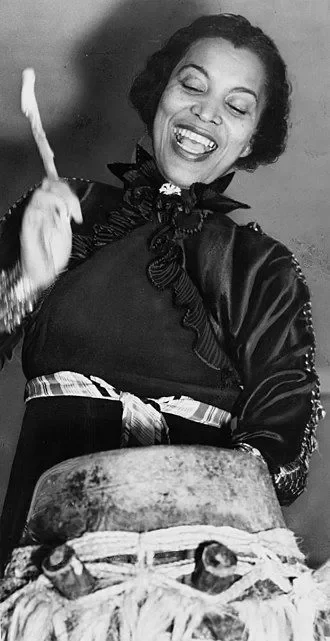
Zora Neale Hurston
Born07 Jan, 1891
Died28 Jan, 1960
NationalityAmerican
Age at time of death69

Rabindranath Tagore
Born07 May, 1861
Died08 Aug, 1941
NationalityIndian
Age at time of death80

Cicely Saunders
Born22 Jun, 1918
Died14 Jul, 2005
NationalityEnglish
Age at time of death87

Joseph Pilates
Born09 Dec, 1883
Died09 Oct, 1967
NationalityGerman
Age at time of death83

Mark Twain
Born30 Nov, 1835
Died21 Apr, 1910
NationalityAmerican
Age at time of death74

Jules Verne
Born08 Feb, 1828
Died24 Mar, 1905
NationalityFrench
Age at time of death77

Jack Welch
Born19 Nov, 1935
Died01 Mar, 2020
NationalityAmerican
Age at time of death84

Nellie Bly
Born05 May, 1864
Died27 Jan, 1922
NationalityAmerican
Age at time of death57

George Burns
Born20 Jan, 1896
Died09 Mar, 1996
NationalityAmerican
Age at time of death100

Ethan Allen
Born21 Jan, 1738
Died12 Feb, 1789
NationalityAmerican
Age at time of death51

Matthew Perry
Born19 Aug, 1969
Died28 Oct, 2023
NationalityAmerican, Canadian
Age at time of death54

Caresse Crosby
Born20 Apr, 1891
Died24 Jan, 1970
NationalityAmerican
Age at time of death78

Will Durant
Born05 Nov, 1885
Died07 Nov, 1981
NationalityAmerican
Age at time of death96

Les Dawson
Born02 Feb, 1931
Died10 Jun, 1993
NationalityBritish
Age at time of death62

James Allen
Born28 Nov, 1864
Died24 Jan, 1912
NationalityBritish
Age at time of death47

Ada Lovelace
Born10 Dec, 1815
Died27 Nov, 1852
NationalityBritish
Age at time of death36

Leo Tolstoy
Born09 Sep, 1828
Died20 Nov, 1910
NationalityRussian
Age at time of death82

George Bernard Shaw
Born26 Jul, 1856
Died02 Nov, 1950
NationalityBritish, Irish
Age at time of death94