Real Celebrities Never Die!
OR
Search For Past Celebrities Whose Birthday You Share
Died Age: 78
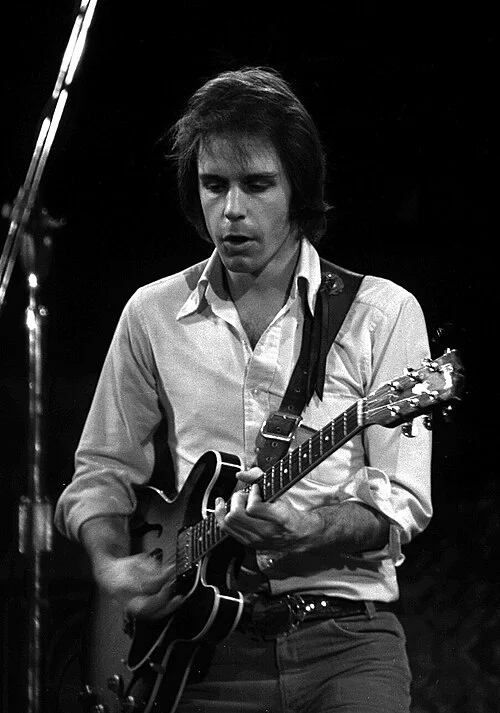
https://en.wikipedia.org/wiki/Bob_Weir
Bob Weir
Birthday:
16 Oct, 1947
Date of Death:
10 Jan, 2026
Cause of death:
Natural Causes
Nationality:
American
Famous As:
American musician and songwriter
Age at the time of death:
78
Robert Hall Weir's Quote's
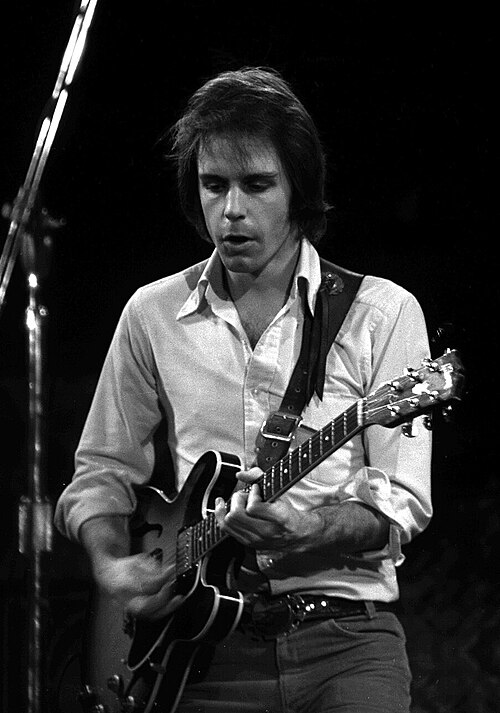
“Music is the language of the spirit. It opens the secret of life bringing peace, abolishing strife.”
Robert Hall Weir
🔗 deadcelebrityhub.com
Bob Weir
About
Bob Weir is a musical seeker whose rhythm guitar became the connective tissue of one of the most enduring cultural experiments in American music. As a founding member of the Grateful Dead, Weir helped build not just a band, but a living, breathing universe—one where songs evolved nightly, audiences became communities, and music functioned as both art and spiritual exploration. His story is not about stardom in the conventional sense; it is about endurance, curiosity, and a lifelong devotion to the idea that music should never stand still.
Early Life: A Restless Beginning
Robert Hall Weir was born on October 16, 1947, in San Francisco and adopted as an infant by Frederic and Eleanor Weir, who raised him in nearby Atherton, California. From an early age, Weir struggled to fit into traditional structures. Diagnosed with dyslexia at a time when it was poorly understood, he found school frustrating and confining. Music, however, offered a different kind of language—one that didn’t demand neat lines or rigid rules.
As a teenager, Weir gravitated toward folk music and the emerging sounds of rock and roll. He learned guitar obsessively, often playing for hours at a time, and developed a taste for improvisation rather than technical perfection. That instinct—to follow feel over form—would later define his role in one of the most improvisational bands in history.
Education: Learning on the Bandstand
Weir’s formal education was brief and ultimately abandoned, but his musical education was relentless. In 1963, at just sixteen years old, he met Jerry Garcia while both were staying in Palo Alto. The meeting proved fateful. Garcia became both mentor and collaborator, introducing Weir to blues traditions, complex song structures, and the discipline required to sustain a working band.
Instead of classrooms, Weir learned on bandstands, in rehearsals, and through marathon jam sessions. His unconventional rhythm guitar style—often weaving counter-melodies rather than keeping strict time—emerged from this hands-on experimentation. It was less about showing off and more about finding the spaces between notes.
Career Journey: Building the Grateful Dead and Beyond
Early Career: The Birth of the Grateful Dead
In 1965, Weir joined Garcia, Phil Lesh, Bill Kreutzmann, and Ron “Pigpen” McKernan to form the Grateful Dead. Initially rooted in jug band music and blues, the group quickly became the house band for Ken Kesey’s Acid Tests, where long improvisations and psychedelic experimentation reshaped their approach to performance.
Weir, the youngest member of the band, grew into his role gradually. Early on, Garcia pushed him hard—sometimes even removing him temporarily from the band to force improvement. The pressure worked. Weir emerged as a disciplined, inventive player whose rhythm guitar became essential to the Dead’s elastic sound.
Major Achievements: Songs, Tours, and Cultural Impact
As a songwriter, Weir co-wrote many of the Dead’s most enduring songs, often collaborating with lyricist John Perry Barlow. Tracks like “Sugar Magnolia,” “Truckin’,” “Cassidy,” and “Playing in the Band” became staples of the group’s ever-changing live repertoire.
The Grateful Dead’s relentless touring schedule—sometimes more than 80 shows a year—cemented Weir as a road-tested musician. Each performance was different, and Weir thrived in that unpredictability. One lesser-known detail: his complex chord voicings were partially influenced by jazz piano theory, which he adapted to guitar in unconventional ways.
Later Career: After Garcia and Continued Evolution
Following Jerry Garcia’s death in 1995, Weir faced the challenge of carrying the music forward without its central figure. Rather than freezing the Grateful Dead in time, he chose evolution. He formed and led projects such as RatDog, Further, and later Dead & Company, introducing the music to new generations of listeners.
In his later years, Weir also explored orchestral arrangements with the Wolf Bros, reimagining Dead songs with strings and horns—proof that reinvention remained central to his philosophy well into his seventies.
Personal Life: Grounded Amid the Chaos
Weir married Natascha Munter in 1999, and together they raised two daughters. Family life brought balance to decades spent on the road. Known for his dedication to physical fitness and surfing, Weir developed routines that allowed him to sustain the physical demands of touring long after many peers had slowed down.
Despite his legendary status, he remains approachable and thoughtful, often speaking openly about aging, discipline, and the responsibility of carrying a musical legacy.
Legacy: A Life in Motion
Bob Weir’s legacy is inseparable from the Grateful Dead, yet it extends far beyond it. He helped redefine what a rhythm guitarist could be, what a live performance could feel like, and what a band could mean to its audience. His career stands as a testament to collaboration, risk-taking, and the belief that music is a conversation—one that never truly ends.
Remembered as both a steward of a cultural movement and a restless creative force, Bob Weir remains a living bridge between eras. His music continues to invite listeners not just to hear, but to participate—to show up, stay curious, and keep the groove moving forward.
Profile Snapshot
Name:
Robert Hall Weir
Popular Name:
Bob Weir
Gender:
Male
Cause of Death:
Natural Causes
Spouse:
Natascha Münter (m.1999)
Place of Birth:
San Francisco, California, U.S.
Place of Death:
U.S.
Occupation / Profession:
American musician and songwriter
Personality Type
Campaigner Bob Weir was an imaginative, warm‑hearted, and free‑spirited musician whose boundless creativity, deep sense of community, and adventurous approach to life and music inspired generations of fans and fellow artists.
Robert Hall Weir's Interesting Facts
Bob Weir co-founded the Grateful Dead in 1965 and, at just 16 years old, became the youngest member of the band.
Bob Weir’s unconventional rhythm guitar style helped define the Grateful Dead’s sound by blending folk, jazz, and rock influences rather than traditional lead-rhythm roles.
He is one of the few musicians to have performed continuously with the same musical lineage for nearly six decades through the Grateful Dead, Dead & Company, and multiple side projects.
Bob Weir is known for his deep interest in Western literature and cowboy culture, which heavily influenced his songwriting themes and stage persona.
Achievements & Awards
Bob Weir is best known as a founding member of the Grateful Dead, who were inducted into the Rock and Roll Hall of Fame in 1994 for their massive influence on rock and jam-band culture.
He also received a Grammy Lifetime Achievement Award with the Grateful Dead in 2007, honoring the band’s lasting impact on music.
In 2020, the Grateful Dead were further recognized with the Kennedy Center Honors, one of the highest artistic awards in the United States.