Real Celebrities Never Die!
OR
Search For Past Celebrities Whose Birthday You Share
Died Age: 96
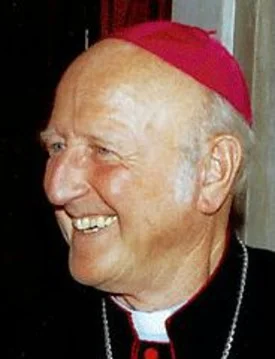
www.aciafrica.org
Fritz Lobinger
Birthday:
21 Jan, 1929
Date of Death:
02 Aug, 2025
Cause of death:
Natural death
Nationality:
German
Famous As:
German prelate
Age at the time of death:
96
Fritz Lobinger's Quote's

“The heart of the Church is the community of people who take responsibility for one another.”
Fritz Lobinger
🔗 deadcelebrityhub.com
Early Life: From Bavaria to Mission Calling
Fritz Lobinger was a visionary missionary bishop whose lifelong ministry in South Africa reshaped how the Church sees community, leadership, and participation. More than just a pastor, he was a reformer—a builder of small Christian communities, a champion of lay leadership, and a theologian who believed deeply in the dignity of every believer.
Born in 1929 in Bavaria, Germany, Lobinger grew up in a world shaped by faith and intellectual curiosity. Even in his youth, he carried in him a deep sense of purpose. He studied theology as a young man, forming lasting friendships with others who felt a calling beyond Europe.
That calling led him far from home: in the mid-1950s, he answered a missionary invitation, leaving Germany to serve in South Africa. It was here, in a land of deep traditions and living cultures, that his life’s work truly began.
Education: Learning to Build Church from the Ground Up
Once in South Africa, Lobinger didn’t simply preach—he listened. He immersed himself in local languages, especially Xhosa, and learned the rhythms of community life. He later returned to Europe to complete doctoral studies in theology, focusing his research on the role of catechists—lay leaders who could carry the heart of the Gospel into neighborhoods that clergy alone could not reach.
This blend of academic rigor and grassroots immersion became the foundation for Lobinger’s distinctive approach: theology rooted in lived experience.
Early Career: Laying Foundations at Lumko
In the late 1960s and early 1970s, Lobinger joined the staff of a missiological institute in South Africa, where he helped pioneer a new way of doing pastoral ministry. Working closely with local lay people, he developed training programs that emphasized shared responsibility, mutual listening, and participatory faith.
He didn’t envision Church as top-down. Instead, he saw small Christian communities—not just as gatherings for prayer, but as authentic spaces of transformation, where faith was discussed, lived, and built together.
Major Achievements: Theology in Action
For decades, Lobinger pushed boundaries. He helped formalize methods of Bible sharing that empowered ordinary believers to read, reflect on, and live Scripture together. He wrote training materials, led workshops, and mentored lay leaders to take ownership of their faith lives.
Perhaps his boldest contribution came later: he proposed a new model of priesthood for regions where ordained clergy were scarce. He suggested ordaining married men—respected community members—whose priestly role would be rooted in their locality, focused on service, and distinct from full-time celibate clergy. His ideas stirred debate, but they also influenced conversations at the highest levels of the Church.
At the same time, he led during a turbulent era. Under his leadership, communities confronted social injustices, racial division, and the long legacy of apartheid. He encouraged civic engagement, reconciliation, and local governance in the Church, believing that faith and justice must go hand in hand.
Later Career: Bishop, Mentor, and Elder Statesman
In the late 1980s, he was appointed bishop of Aliwal North in South Africa. As bishop, he continued to champion community-based ministry. He invited women, youth, and laypeople into roles of leadership and advocated for participatory structures in parish life.
Even after his retirement in the early 2000s, Lobinger remained deeply influential. He continued writing, speaking, and mentoring; his ideas—especially about lay-led communities and contextual priesthood—remained alive in many parts of the world.
Personal Life: A Man of Humility and Vigor
Lobinger was not just a thinker; he was a doer. He loved nature, enjoyed swimming and climbing, and carried a certain physical liturgy in his daily life. Despite his busy ministry, he remained humble, grounded, and deeply connected to the people he served.
He spent his later years in a community of fellow priests, still engaged in conversation, still reflecting, still hopeful. He died in his mid-90s, having lived a long life marked by service, innovation, and caring leadership.
Legacy: A Participatory Church Dreamer
Fritz Lobinger’s impact on the Church is profound. He helped shape a model of Christian community that doesn’t rely on top-down directives but flourishes through mutual listening, lay leadership, and local ownership. His proposals for an adapted priestly ministry continue to inspire debate and hope, especially among communities that long for accessible sacraments and local care.
His life invites us to imagine a more inclusive, participatory Church—one where every baptized person has a role, where small communities carry immense spiritual weight, and where faith is lived out in relationship, not just ritual.
Fritz Lobinger is remembered as a bridge-builder: between cultures, between ordained and lay, and between tradition and innovation. His legacy plants the seeds for a Church that listens, empowers, and journeys together.
Profile Snapshot
Name:
Fritz Lobinger
Popular Name:
Fritz Lobinger
Gender:
Male
Cause of Death:
Natural death
Spouse:
Unmarried
Place of Birth:
Passau, Bavaria, Germany
Place of Death:
Pretoria, South Africa
Occupation / Profession:
German prelate
Personality Type
Executive: Fritz Lobinger was a compassionate, visionary and courageous church leader — deeply committed to justice, community empowerment, and cultural inclusivity — who combined idealistic faith with practical reforms to build a more participatory, human‑centered Church.
Fritz Lobinger's Interesting Facts
Fritz Lobinger was a German missionary-turned-bishop in South Africa who learned Xhosa and earned the honorary name umGcina (“the Keeper”) in the local community.
As head of the Lumko Missiological Institute, he pioneered the small Christian communities model and a Bible-sharing method that empowered laypeople
Achievements & Awards
Fritz Lobinger did not receive formal achievement awards, but he is widely remembered for his significant contributions to the Church.
He was known as the “bishop of the laity” for pioneering small Christian communities and promoting active lay participation.
His legacy is marked by his dedication to social justice, pastoral innovation, and fostering community involvement rather than formal honors.
External Links