Real Celebrities Never Die!
OR
Search For Past Celebrities Whose Birthday You Share
Died Age: 77
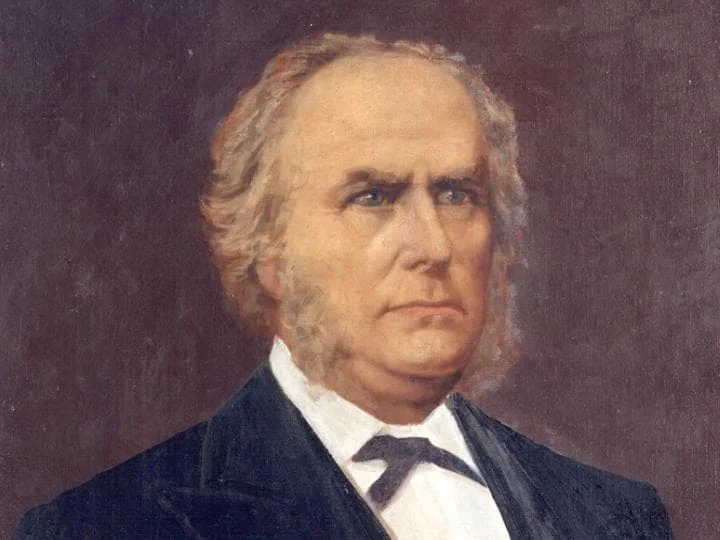
source: hvacrnews.com.au
James Harrison
Birthday:
17 Apr, 1816
Date of Death:
03 Sep, 1893
Cause of death:
Pleurisy
Nationality:
Scottish,Australian
Famous As:
Engineer
Age at the time of death:
77
James Harrison's Quote's

“Refrigeration is the key to the future of food preservation.”
James Harrison
🔗 deadcelebrityhub.com
Introduction
James Harrison (1816–1893) was an Australian engineer and inventor, regarded as the founding father of the refrigeration era in Australia. His inventions formed the basis of modern-day refrigeration and air conditioning, which have extensively altered society by allowing longer-term transportation and storage of perishable goods.
Early Life and Education
James Harrison was born on April 15, 1816, in Scotland and trained as a printer before he emigrated to Australia in early 1837. Scattered business ventures gave way to an initial career in the printing industry; however, it was his endeavors in engineering that would come to define him.
Transition to Engineering
His foray into refrigeration technology started with a keen interest in improving methods to preserve food and drink. By the early 1850s, Harrison had become heavily interested in developing refrigeration technology, fueled by the difficulties of keeping perishable items fresh in a hot Australian climate. His primary interest then shifted to the effect of thermodynamic principles on devising a practical refrigeration machine.
Invention of the Refrigeration System
Harrison’s primary commercial interest was to develop a mechanical refrigeration unit that could be used in any climate. He successfully demonstrated a vapour-compression refrigeration system in 1856, of which the basic design remains in use today. This system worked by using coolant evaporation to absorb heat and compressing the vapor to raise its temperature and pressure, which allowed for cooling air.
Commercial Success and Applications
His refrigeration equipment was first utilized in a brewery in Geelong, Victoria, Australia, where it proved highly successful. This practical application of his invention not only demonstrated its functionality but also showed its commercial viability. Harrison’s device dramatically increased the quality and shelf life of beer and other perishable goods, making it a natural fit in the food and beverage industry.
Contributions to Air Conditioning
Aside from his work in refrigeration, Harrison also made significant contributions to the field of air conditioning. He designed one of the first air conditioning systems, applying refrigeration technology to cool air in indoor spaces. This early air conditioning unit was another important step toward the development of modern air conditioning systems.
Challenges and Legacy
Despite his successes, Harrison faced many frustrating challenges over the years, and few in the business community believed in him. However, his persistence and determination ultimately led to widespread recognition of his work. Harrison’s innovations laid the groundwork for future advancements in refrigeration and air conditioning, leading to more efficient large-scale systems than had been conceived in previous decades.
Recognition and Impact
James Harrison received various praises and honors for his work. During his lifetime, he was known as a pioneer in refrigeration technology, and his contributions have had a lasting impact on both industry practices and everyday life. His inventions transformed how food and beverages were stored, significantly improving quality of life and the efficiency of commerce.
Death and Legacy
James Harrison died on May 3, 1893, in Australia. His legacy lives on through the quality refrigeration and air conditioning systems used by numerous industries, benefiting people around the world. Harrison’s approach to solving practical problems through engineering innovation serves as an exemplary model of how one person’s efforts can have a profound impact on technology and society.
Profile Snapshot
Name:
James Harrison
Popular Name:
James Harrison
Gender:
Male
Cause of Death:
Pleurisy
Spouse:
Married three times; specific names not documented
Place of Birth:
Dunbar, East Lothian, Scotland
Place of Death:
Geelong, Victoria, Australia
Occupation / Profession:
Engineer
Journalist
Politician
Personality Type
Logician: Innovative inventors with an unquenchable thirst for knowledge. He had high innovative spirit and his achievements are its proof.
James Harrison's Interesting Facts
Harrison's invention played a crucial role in the Australian meat export industry by enabling the shipment of frozen meat to Europe.
Harrison was originally trained as a printer before shifting his focus to engineering
He established one of the first newspapers in Victoria, Australia, called the "Geelong Advertiser."
His refrigeration process used ether to cool the air, a method that was revolutionary at the time.
Achievements & Awards
Awarded a medal at the 1873 Melbourne Exhibition for his refrigeration technology.
Invented the first practical mechanical refrigeration system.
Pioneered refrigeration in the brewing industry, allowing for year-round brewing.
Latest Profiles
People also viewed
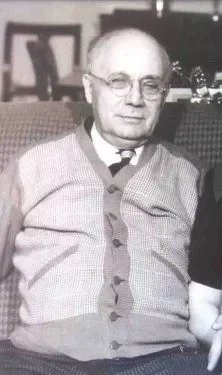
Otto Frederick Rohwedder
Born28 Jul, 1880
Died08 Nov, 1960
NationalityAmerican
Age at time of death80
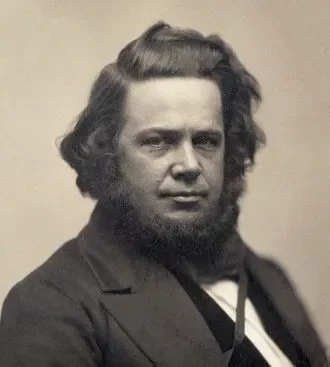
Elias Howe
Born09 Jul, 1819
Died03 Oct, 1867
NationalityAmerican
Age at time of death48
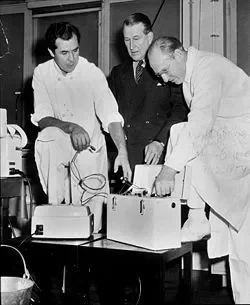
Rune Elmqvist
Born01 Dec, 1906
Died15 Dec, 1996
NationalitySwedish
Age at time of death90

Clarice Lispector
Born10 Dec, 1920
Died09 Dec, 1977
NationalityBrazilian
Age at time of death56

Gerald Ford
Born14 Jul, 1913
Died26 Dec, 2006
NationalityAmerican
Age at time of death93
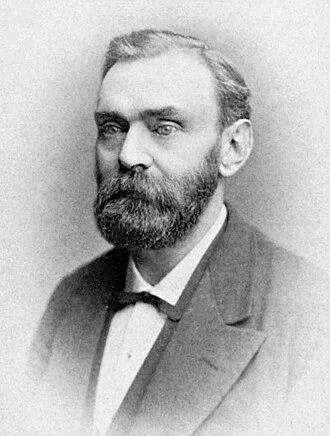
Alfred Nobel
Born21 Oct, 1833
Died10 Dec, 1896
NationalitySwedish
Age at time of death63
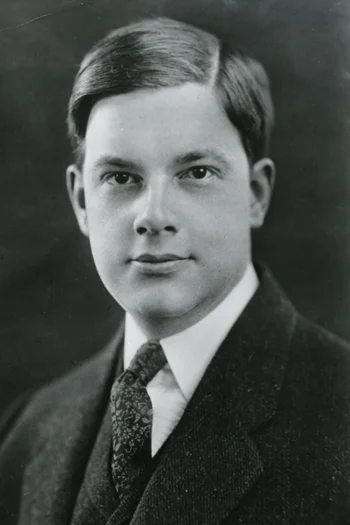
Joyce Kilmer
Born06 Dec, 1886
Died30 Jul, 1918
NationalityAmerican
Age at time of death31
Thomas Newcomen
Born28 Feb, 1664
Died05 Aug, 1729
NationalityEnglish
Age at time of death65
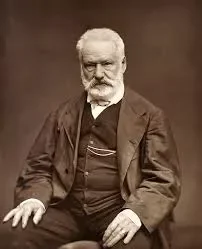
Victor Hugo
Born26 Feb, 1802
Died22 May, 1885
NationalityFrench
Age at time of death83
Leonardo da Vinci
Born15 Apr, 1452
Died02 May, 1519
NationalityItalian
Age at time of death67
George Murphy
Born04 Jul, 1902
Died03 May, 1992
NationalityAmerican
Age at time of death89
P. T. Barnum
Born05 Jul, 1810
Died07 Apr, 1891
NationalityAmerican
Age at time of death80
Henry Royce
Born27 Mar, 1863
Died22 Apr, 1933
NationalityBritish
Age at time of death70
Nils Bohlin
Born17 Jul, 1920
Died26 Sep, 2002
NationalitySwedish
Age at time of death82
Robert Fulton
Born14 Nov, 1765
Died24 Feb, 1815
NationalityAmerican
Age at time of death49
Rajendra Prasad
Born03 Dec, 1884
Died28 Feb, 1963
NationalityIndian
Age at time of death78

Nelson Rockefeller
Born08 Jul, 1908
Died26 Jan, 1979
NationalityAmerican
Age at time of death70

Nellie Bly
Born05 May, 1864
Died27 Jan, 1922
NationalityAmerican
Age at time of death57
Galileo Galilei
Born15 Feb, 1564
Died08 Jan, 1642
NationalityItalian
Age at time of death77

Ethan Allen
Born21 Jan, 1738
Died12 Feb, 1789
NationalityAmerican
Age at time of death51