Real Celebrities Never Die!
OR
Search For Past Celebrities Whose Birthday You Share
Died Age: 90
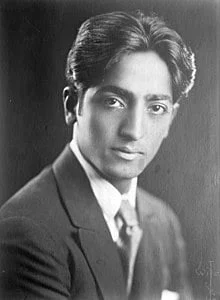
source:https://upload.wikimedia.org
Jiddu Krishnamurti
Birthday:
11 May, 1895
Date of Death:
17 Feb, 1986
Cause of death:
Pancreatic Cancer
Nationality:
Indian
Famous As:
Author
Age at the time of death:
90
Jiddu Krishnamurti's Quote's

“If you begin to understand what you are without trying to change it, then what you are undergoes a transformation”
Jiddu Krishnamurti
🔗 deadcelebrityhub.com
Early Life and Discovery by Theosophists
Jiddu Krishnamurti was born on May 11, 1895, in Madanapalle, India. His early years were shaped by adversity, but his life took a dramatic turn in 1909 when he was discovered by Charles Webster Leadbeater, a member of the Theosophical Society. Leadbeater proclaimed Krishnamurti as the vehicle for the incarnation of the World Teacher, setting the stage for what would become a significant chapter in his life.
The Formation of the Order of the Star in the East
Following Leadbeater’s announcement, the Theosophical Society formed the Order of the Star in the East, which was dedicated to preparing for the arrival of the World Teacher. Krishnamurti, though initially compliant with the role, would later reject the notion entirely, showing early signs of the independent thinker he would become.
Breaking Away from Theosophy
In 1929, Krishnamurti made a revolutionary move during the Star Camp gathering in Ommen, Netherlands, when he dissolved the Order of the Star and famously declared, “Truth is a pathless land.” This statement symbolized his break from the roles imposed on him and his decision to pursue a personal, unfettered path of self-discovery. As the philosopher Alan Watts said, “The more a thing tends to be permanent, the more it tends to be lifeless,” reflecting Krishnamurti’s desire to live without being confined by rigid beliefs.
Teachings on the Mind and Freedom
Krishnamurti’s teachings focused on the exploration of the mind, thought, and the nature of true freedom. He emphasized that individuals must question authority and transcend the conditioned patterns that govern their thinking. His belief that “the observer is the observed” underscores his view that one’s internal world directly influences their external experiences.
Prolific Writing and Philosophical Works
Though he shunned formal education, Krishnamurti was a prolific writer. Some of his most renowned works, including The First and Last Freedom, The Krishnamurti Reader, and Freedom from the Known, continue to offer profound insights into human consciousness and freedom. His thoughts resonate with Carl Jung’s statement: “Who looks outside, dreams; who looks inside, awakes,” emphasizing the importance of inner awareness.
Personal Life and Philosophy of Simplicity
Krishnamurti led a simple and contemplative life. He remained unmarried, lived with minimal attachments, and preferred a nomadic existence. His humility and authenticity attracted followers who admired his lack of pretense and his rejection of materialism. Like the sage Diogenes who wandered with a lantern in search of an honest man, Krishnamurti sought truth in simplicity and self-awareness.
Legacy and Impact
Krishnamurti passed away on February 17, 1986, in Ojai, California, leaving behind a lasting legacy that continues to influence people globally. His impact transcends religious or philosophical traditions, inviting people to independently explore the fundamental questions of existence. As he once said, “It is no measure of health to be well-adjusted to a profoundly sick society,” a powerful reminder that his teachings encourage deep introspection and an unwavering commitment to understanding the true nature of life.
A Timeless Philosopher
Jiddu Krishnamurti’s life illustrates an incredible journey from a proclaimed spiritual figure to a revolutionary thinker who inspired millions to question, explore, and seek freedom. His insights on the nature of the mind and self-realization remain as timeless and relevant today as ever, encouraging each individual to forge their own path in a world often bound by conformity and external influence.
Profile Snapshot
Name:
Jiddu Krishnamurti
Popular Name:
Jiddu Krishnamurti
Gender:
Male
Cause of Death:
Pancreatic Cancer
Spouse:
Unmarried
Place of Birth:
Madanapalle, Madras Presidency, British India
Place of Death:
Ojai, California, U.S.
Occupation / Profession:
Author
Philosopher
Public speaker
Personality Type
Debater: Smart and curious thinkers who cannot resist an intellectual challenge. He was very famous for his thinking and debating abilities.
Jiddu Krishnamurti's Interesting Facts
Despite being groomed as the "World Teacher" by the Theosophical Society, Krishnamurti shocked everyone by dissolving the Order of the Star in the East in 1929 and rejecting the role of a spiritual leader.
He experienced regular psychic phenomena throughout his life, including a profound "mystical union" experience in 1922 that significantly influenced his philosophy.
Krishnamurti had an IQ of 160 but struggled academically as a child, being considered intellectually disabled and often beaten by his teachers and father.
Krishnamurti never read any religious or psychology books, preferring to use simple language in his teachings and claiming that his insights were based on direct observation rather than study.
Achievements & Awards
Krishnamurti founded five schools in India, one in England, Brockwood Park School, and one in California, Oak Grove School.
External Links
Latest Profiles
People also viewed
Eva Crane
Born12 Jun, 1912
Died06 Sep, 2007
NationalityBritish
Age at time of death95
Ursula Franklin
Born16 Sep, 1921
Died22 Jul, 2016
NationalityGerman, Canadian
Age at time of death94
George Boole
Born02 Nov, 1815
Died08 Dec, 1864
NationalityEnglish
Age at time of death49
Phyllis Diller
Born17 Jul, 1917
Died20 Aug, 2012
NationalityAmerican
Age at time of death95
Rabindranath Tagore
Born07 May, 1861
Died08 Aug, 1941
NationalityIndian
Age at time of death80
Lily Ebert
Born29 Dec, 1923
Died09 Oct, 2024
NationalityHungarian, British
Age at time of death100
Jonas Cohn
Born01 Dec, 1869
Died28 Jan, 1947
NationalityGerman
Age at time of death77
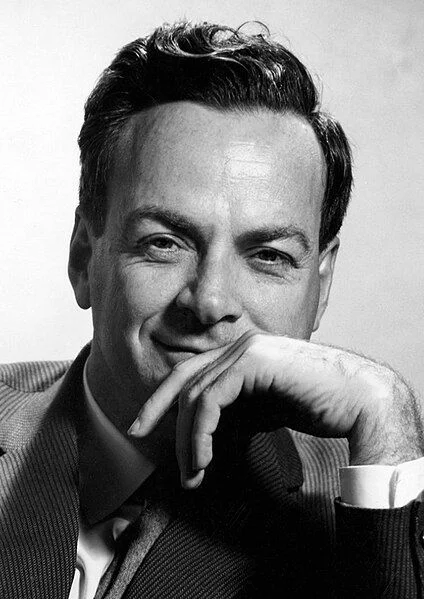
Richard Feynman
Born11 May, 1918
Died15 Feb, 1988
NationalityAmerican
Age at time of death69
Marshall Brain
Born17 May, 1961
Died20 Nov, 2024
NationalityAmerican
Age at time of death63
Tina Turner
Born26 Nov, 1939
Died24 May, 2023
NationalityAfrican, American
Age at time of death83
Eric Morecambe
Born14 May, 1926
Died28 May, 1984
NationalityBritish
Age at time of death58
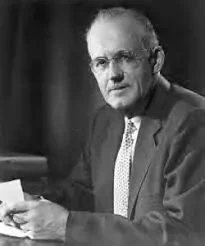
A. W. Tozer
Born21 Apr, 1897
Died12 May, 1963
NationalityAmerican, Canadian
Age at time of death66
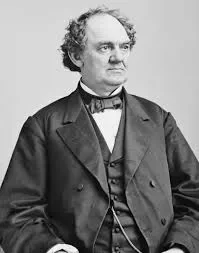
P. T. Barnum
Born05 Jul, 1810
Died07 Apr, 1891
NationalityAmerican
Age at time of death80
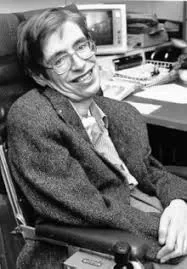
Stephen Hawking
Born08 Jan, 1942
Died14 Mar, 2018
NationalityEnglish
Age at time of death76
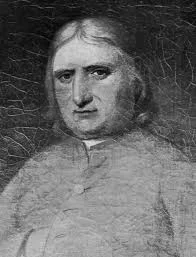
George Fox
Born04 Jul, 1624
Died13 Jan, 1691
NationalityEnglish
Age at time of death66

Ethan Allen
Born21 Jan, 1738
Died12 Feb, 1789
NationalityAmerican
Age at time of death51
Albert Hofmann
Born11 Jan, 1906
Died29 Apr, 2008
NationalitySwiss
Age at time of death102
Will Durant
Born05 Nov, 1885
Died07 Nov, 1981
NationalityAmerican
Age at time of death96
Herbert Hoover
Born10 Aug, 1874
Died20 Oct, 1964
NationalityAmerican
Age at time of death90

Jade Goody
Born05 Jun, 1981
Died22 Mar, 2009
NationalityBritish
Age at time of death27