Real Celebrities Never Die!
OR
Search For Past Celebrities Whose Birthday You Share
Died Age: 37
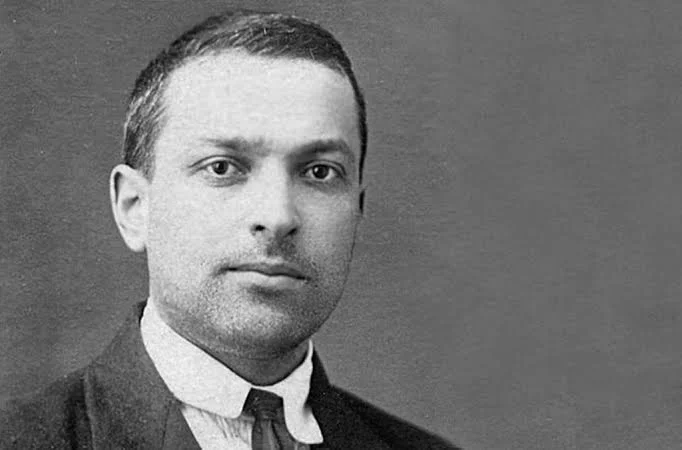
source:encrypted-tbn1.gstatic.com
Lev Vygotsky
Birthday:
17 Nov, 1896
Date of Death:
11 Jun, 1934
Cause of death:
Tuberculosis
Nationality:
Russian
Famous As:
Psychologist
Age at the time of death:
37
Lev Vygotsky's Quote's

“What a child can do in cooperation today, he can do alone tomorrow.”
Lev Vygotsky
🔗 deadcelebrityhub.com
Early Life and Education
Lev Semyonovich Vygotsky, known as Lev Vygotsky, was born on November 5, 1896, in Orsha, Russian Empire, into a middle-class Russian-Jewish family. An only child, Vygotsky was homeschooled until 1911 and later admitted to Moscow University in 1913, where he initially studied medical science before transferring to law school while maintaining a strong interest in social sciences.
Career Beginnings
In 1924, Vygotsky attended the All-Russian Psychoneurological Congress in Petrograd, where he was invited to join the Psychological Institute in Moscow. He began his work at the institute as a second-class staff scientist. However, a diagnosis of tuberculosis in 1926 led him to focus more intensely on research and the development of culture-historical approaches to understanding human cognition.
Theories and Contributions
Vygotsky’s most influential theory is the Zone of Proximal Development, which describes the difference between what a learner can do independently and what they can achieve with support. He also proposed cultural-historical psychology, emphasizing that cognitive development is intertwined with cultural and historical contexts. His sociocultural theory highlighted the importance of social interactions and language in cognitive development.
Work and Collaborations
Throughout his career, Vygotsky worked at various institutions in Moscow and was appointed a professor by the State Academic Council in 1927. He collaborated with Alexander Luria to develop “Instrumental Psychology” and continued to contribute to the field as a freelance scientific consultant, leading psychological laboratories.
Play and Development
Vygotsky emphasized the significance of play in childhood development, arguing that play is crucial for cognitive growth. He authored numerous influential works, including “Pedagogical Psychology,” “The Psychology of Art,” “Pedology of School Age,” “Thinking and Speech,” “Thought and Language,” and “Mind in Society: The Development of Higher Psychological Processes.”
Legacy and Death
Lev Semyonovich Vygotsky passed away on June 11, 1934, from a relapse of tuberculosis at the young age of 37 in Moscow. Despite his brief life, his ideas and contributions have had a profound impact on psychology and education. Vygotsky’s theories in cognitive and developmental psychology continue to influence contemporary psychologists and educators today.
Profile Snapshot
Name:
Lev Vygotsky
Popular Name:
Lev Vygotsky
Gender:
Male
Cause of Death:
Tuberculosis
Spouse:
Roza Smekhova
Place of Birth:
Orsha, Mogilev Governorate, Russian Empire (now Belarus)
Place of Death:
Moscow, Russian SFSR, Soviet Union
Occupation / Profession:
Psychologist
Personality Type
Executive: Excellent administrators, unsurpassed at managing things or people. He had strong leadership abilities.
Lev Vygotsky's Interesting Facts
Lev Vygotsky had an interest in the humanities and social sciences, but at the insistence of his parents, he applied to medical school.
Only a couple of Lev Vygotsky's texts were published in English before the translation of Thinking and Speech.
Achievements & Awards
Developed sociocultural theory in psychology
Latest Profiles
People also viewed
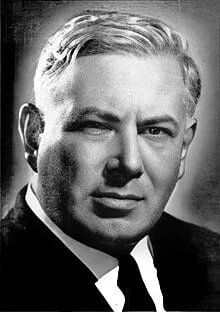
William Marston
Born09 May, 1893
Died02 May, 1947
NationalityAmerican
Age at time of death53

Frank Rosenblatt
Born11 Jul, 1928
Died11 Jul, 1971
NationalityAmerican
Age at time of death43
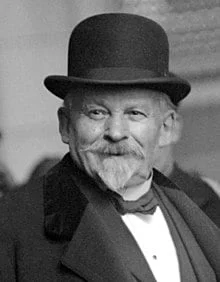
Émile Coué
Born26 Feb, 1857
Died02 Jul, 1926
NationalityFrench
Age at time of death69
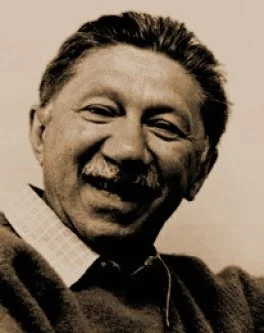
Abraham Maslow
Born01 Apr, 1908
Died08 Jun, 1970
NationalityAmerican
Age at time of death62