Real Celebrities Never Die!
OR
Search For Past Celebrities Whose Birthday You Share
Died Age: 73
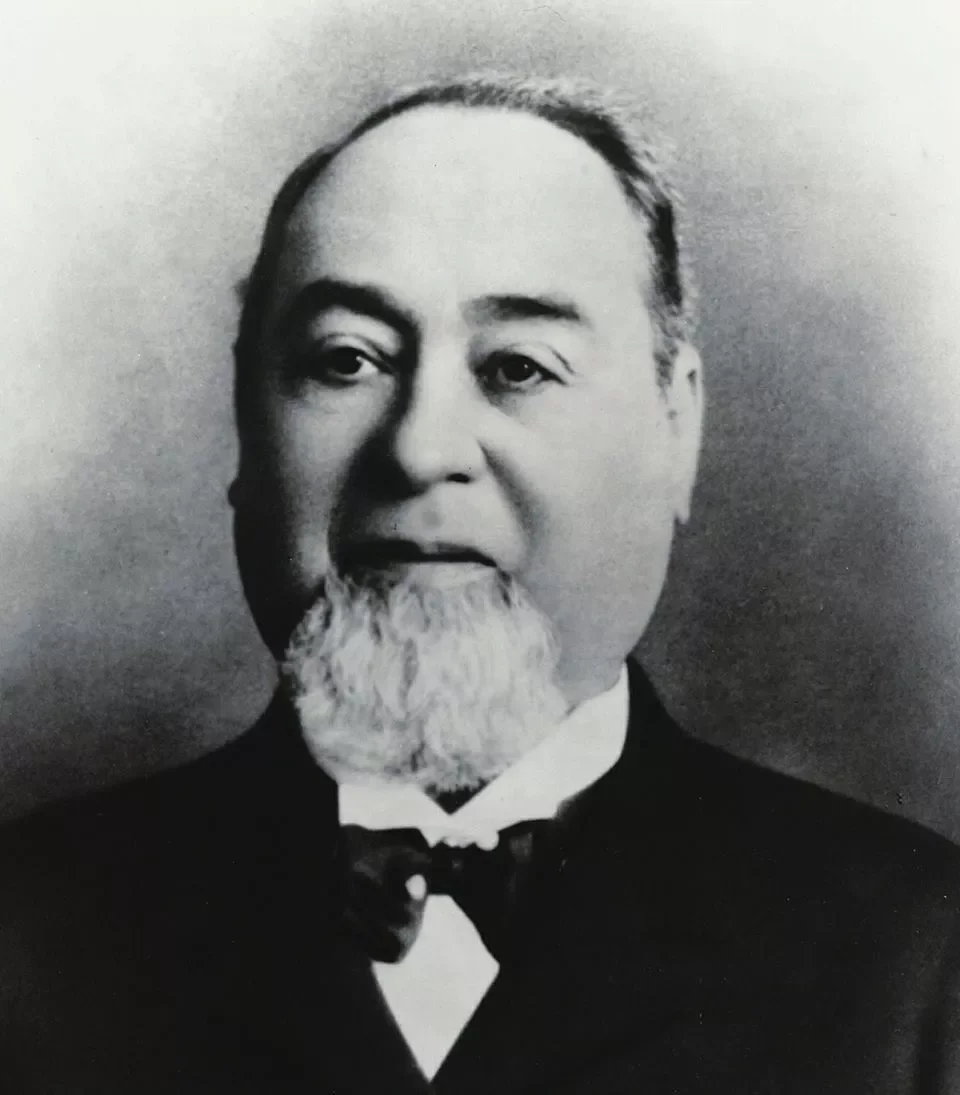
source:wikipedia.org
Levi Strauss
Birthday:
26 Feb, 1829
Date of Death:
26 Sep, 1902
Cause of death:
Heart attack
Nationality:
German, American
Famous As:
Businessman
Age at the time of death:
73
Levi Strauss's Quote's

“Objects are what matter. Only they carry the evidence that throughout the centuries something really happened among human beings”
Levi Strauss
🔗 deadcelebrityhub.com
Early Life
Levi Strauss was more than just a businessman; he was a visionary whose name became synonymous with one of the most iconic garments in history—the blue jeans. His journey from a small Bavarian town to the bustling streets of San Francisco laid the foundation for a fashion revolution that endures to this day.
Born in 1829 in Buttenheim, Bavaria, Levi Strauss faced hardship early in life when his father passed away. Seeking better opportunities, he and his sisters immigrated to the United States in 1847, joining their brothers in New York, who had already established a successful wholesale dry goods business, J. Strauss Brother & Co. Immersed in the world of textiles, Levi quickly learned the trade, setting the stage for his own entrepreneurial venture.
The Birth of a Business Empire
In 1853, after becoming an American citizen, Strauss moved west to San Francisco, a city teeming with gold miners and fortune seekers. Recognizing a demand for durable clothing, he established his own dry goods business, selling fabric, clothing, and other essentials to the working class. His reputation for quality and reliability grew, but it was a fateful partnership that would forever change his legacy.
The Innovation That Changed Everything
In 1872, a tailor from Reno, Nevada, named Jacob W. Davis wrote to Strauss, detailing an innovative way to make pants more durable by reinforcing the seams with metal rivets. Davis needed financial backing to secure a patent, and Levi, recognizing the potential of this idea, eagerly joined forces with him. On May 20, 1873, the two men received U.S. Patent No. 139,121 for their “Improvement in Fastening Pocket-Openings,” marking the birth of blue jeans.
A Legacy Woven in Denim
With the patent in hand, Strauss and Davis held exclusive rights to manufacture riveted clothing. They initially branded their product as “XX,” a reference to the strongest grade of denim available. Later, the name was changed to “501,” a designation that remains synonymous with Levi’s signature jeans. Originally designed for laborers, the jeans soon transcended their working-class roots, becoming a staple of American fashion and eventually a global phenomenon.
A Life of Business and Benevolence
Despite his immense success, Levi Strauss remained humble and generous. He dedicated himself to philanthropy, donating to hospitals, orphanages, and schools, ensuring that his wealth benefited those in need. Never marrying, Strauss devoted his life to his business and charitable work. When he passed away in 1902, his nephews inherited his thriving company, which remains in family hands through a private trust.
More than a century later, Levi Strauss’s legacy continues to thrive. His pioneering spirit, commitment to quality, and ability to foresee fashion trends cemented his place in history. What began as a practical solution for workers evolved into a cultural icon—one that continues to shape the way the world dresses today.
Profile Snapshot
Name:
Levi Strauss
Popular Name:
Levi Strauss
Gender:
Male
Cause of Death:
Heart attack
Spouse:
Unmarried
Place of Birth:
Buttenham, Kingdom of Bavaria, German Confideration
Place of Death:
San Francisco, California, U.S.
Occupation / Profession:
Businessman
Personality Type
Entrepreneur: Smart, energetic and very perceptive people, who truly enjoy living on the edge. Bold and practical people who love to push boundaries and discover new ideas.
Levi Strauss's Interesting Facts
Levi’s 501 is the oldest and best known Levi Strauss jeans model.
Levi Strauss’ nephew inherited the company from him since he had no children
Strauss founded his first textile wholesale in 1853 after moving to San Francisco.
Achievements & Awards
He was inducted into the Hall of Great Westerners of the National Cowboy & Western Heritage Museum in 1994
External Links
Additional Links
https://en.wikipedia.org/wiki/Jacob_W._Davishttps://rapidleaks.com/lifestyle/fashion/facts-about-levi-strauss/https://www.16personalities.com/estp-personalityhttps://www.biography.com/fashion-designer/levi-strausshttps://www.brainyquote.com/authors/levi-strauss-quoteshttps://www.levistrauss.com/2013/03/14/the-story-of-levi-strauss/
Latest Profiles
People also viewed

Richard DeVos
Born04 Mar, 1926
Died06 Sep, 2018
NationalityAmerican
Age at time of death92

Alfred Nobel
Born21 Oct, 1833
Died10 Dec, 1896
NationalitySwedish
Age at time of death63

Marshall Brain
Born17 May, 1961
Died20 Nov, 2024
NationalityAmerican
Age at time of death63

Isak Andic
Born01 Oct, 1953
Died14 Dec, 2024
NationalityTurkish, Spanish
Age at time of death71
Cyrus S. Eaton
Born27 Dec, 1883
Died09 May, 1979
NationalityCanadian, American
Age at time of death95

Robert Fulton
Born14 Nov, 1765
Died24 Feb, 1815
NationalityAmerican
Age at time of death49
Louis Vuitton
Born04 Aug, 1821
Died27 Feb, 1892
NationalityFrench
Age at time of death70
Ray Croc
Born05 Oct, 1902
Died14 Jan, 1984
NationalityAmerican
Age at time of death81
Nelson Rockefeller
Born08 Jul, 1908
Died26 Jan, 1979
NationalityAmerican
Age at time of death70

Momofuku Ando
Born05 Mar, 1910
Died05 Jan, 2007
Nationalityjapanese
Age at time of death96

Hudson Fysh
Born07 Jan, 1895
Died06 Apr, 1974
NationalityAustralian
Age at time of death79
Heinrich Schliemann
Born06 Jan, 1822
Died26 Dec, 1890
NationalityGerman
Age at time of death68

Ethan Allen
Born21 Jan, 1738
Died12 Feb, 1789
NationalityAmerican
Age at time of death51
Cornelius Vanderbilt
Born27 May, 1794
Died04 Jan, 1877
NationalityAmerican
Age at time of death82
Alfred Carlton Gilbert
Born15 Feb, 1884
Died24 Jan, 1961
NationalityAmerican
Age at time of death76
Joseph B. Friedman
Born09 Oct, 1900
Died21 Jun, 1982
NationalityAmerican
Age at time of death81
Harvey Hubbell
Born20 Dec, 1857
Died17 Dec, 1927
NationalityAmerican
Age at time of death69
Herbert Hoover
Born10 Aug, 1874
Died20 Oct, 1964
NationalityAmerican
Age at time of death90

Rollin King
Born10 Apr, 1931
Died26 Jun, 2014
NationalityAmerican
Age at time of death83