Real Celebrities Never Die!
Enter your birthday to meet your past celebrity birthday twins.
OR
Died Age: 82
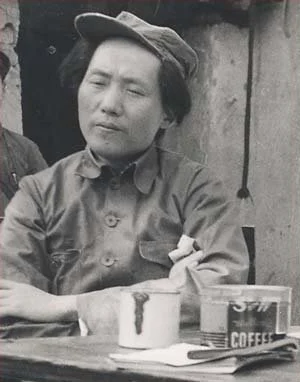
wikimedia.org
Mao Zedong
Birthday:
25 Dec, 1893
Date of Death:
09 Sep, 1976
Cause of death:
Heart attack
Nationality:
Chinese
Famous As:
Dictator
Age at the time of death:
82
Mao Zedong's Quote's

“Political power grows out of the barrel of a gun.”
Mao Zedong
🔗 deadcelebrityhub.com
Mao Zedong: Early Life and Family Background
Mao Zedong was born on December 26, 1893, in Shaoshan, Hunan Province, China. He grew up to be the revolutionary who turned China into a communist nation, shaking up its politics and society in ways still felt today. As the guy who kicked off the People’s Republic of China (PRC), Mao left behind a legacy full of big changes, bold ideas, and some pretty divisive moves that keep folks talking about what modern China really means. Mao came from a peasant family in the farming village of Shaoshan. His dad, Mao Yichang, was a tough, driven grain merchant who pulled the family up a notch with his hard work and penny-pinching. His mom, Wen Qimei, was a gentle soul, deep into Buddhism, who fed Mao’s curiosity and gave him a soft place to land. Even though they had more than most peasants around them, Mao and his strict dad butted heads a lot. That friction lit a fire in him—he wanted to break free and do his own thing. He went to local schools until he was 13, then dropped out to help on the farm. But rural life didn’t sit right with him—he had bigger dreams. At 14, he ditched an arranged marriage and headed to Changsha, Hunan’s capital, chasing more schooling. That’s where the Xinhai Revolution of 1911 first opened his eyes to rebellion.
Education and Formative Years
In Changsha, Mao signed up at the First Normal School, diving into old Chinese classics and new Western ideas. He looked up to Sun Yat-sen’s push for a republic but started leaning toward Marxism when he saw how rough the peasants had it. After finishing school in 1919, he landed a gig as a librarian at Peking University, rubbing shoulders with big thinkers like Chen Duxiu. That’s when he helped start the Chinese Communist Party (CCP) in 1921. Those early years were all about digging into ideas and stirring things up at the grassroots. Mao ran study groups and penned essays, arguing socialism could fix China’s woes. He stood out by betting on peasants—not city workers—as the real spark for revolution.
Personal Life
Mao’s personal life was a rollercoaster. He had four wives over the years. His first, Luo Yigu, came from an arranged setup he walked away from. In 1920, he married Yang Kaihui, a fellow rebel who gave him three kids before Nationalist forces killed her in 1930 during China’s civil war. Then came He Zizhen in 1928—she stuck with him through the brutal Long March, even while pregnant, but they split in 1939. His last wife was Jiang Qing, an ex-actress who made waves during the Cultural Revolution. Mao had a bunch of kids but kept them at arm’s length, wrapped up in his political world. People close to him said he had this magnetic, mysterious vibe despite his hard-edged leadership style.
Professional Career and Achievements
Mao climbed the CCP ranks through moments like the Autumn Harvest Uprising (1927) and the Long March (1934–1935). Those tough times made him the party’s top dog by 1935. He cooked up guerrilla tactics that worked wonders against Chiang Kai-shek’s Nationalists and Japanese invaders in World War II. On October 1, 1949, Mao stood up and declared the PRC after beating the Nationalists in the civil war. As CCP chairman, he shook things up with land handouts and industrial pushes to build a socialist China. But his big plans, like the Great Leap Forward (1958–1962), backfired hard, sparking famine and costing millions of lives. In 1966, he kicked off the Cultural Revolution to root out “counter-revolutionaries.” It turned into a wild decade of class fights, wrecked artifacts, and purges in the CCP. Even with all the mess, Mao kept this larger-than-life image going strong.
Contributions and Impact
Mao Zedong shook China to its core—some say for better, others for worse. He pulled the country together under communism after years of chaos and foreign meddling. His moves built roads, bridges, and a bigger spot for China on the Cold War map. But it came at a steep price—tens of millions died from hunger, purges, and crackdowns. Some see him as a dreamer who lifted China up; others call him a brutal tyrant who left scars too deep to ignore.
Death and Legacy
Mao Zedong passed away on September 9, 1976, at 82 in Beijing after a string of heart attacks, worsened by Parkinson’s. His death closed the book on an era of fierce ideals and tight control. For eight days, over a million people filed past his body in Beijing’s Great Hall of the People to say goodbye. His face still stares out from Tiananmen Square, a constant reminder of his grip on China’s story. Mao splits opinions like few others. Inside China and out, some cheer him for forging a united nation; others can’t look past the havoc his policies wreaked on lives and freedoms.
Profile Snapshot
Name:
Mao Zedong
Popular Name:
Mao Zedong
Gender:
Male
Cause of Death:
Heart attack
Spouse:
Luo Yixiu
Yang Kaihui
Jiang Qing
Place of Birth:
Shaoshan, Hunan Province, Qing Dynasty (now China)
Place of Death:
Beijing, People’s Republic of China
Occupation / Profession:
Dictator
Politician
Revolutionary
Writer
Personality Type
Commander Bold, imaginative and strong-willed leaders, always finding a way – or making one. Mao’s visionary leadership, strategic brilliance (e.g., Long March), and authoritarian control suggest a commanding, goal-driven personality.
Mao Zedong's Interesting Facts
Born into a farming family in Hunan Province, Mao’s humble beginnings shaped his vision of empowering peasants as the backbone of revolution.
He launched the Cultural Revolution (1966–1976), a controversial campaign aimed at preserving communist ideology but which caused widespread turmoil and suffering.
His embalmed body remains on display in Beijing’s Mao Mausoleum.
In the 1930s, Mao led the famous 6,000-mile Long March, a military retreat that solidified his leadership within the Communist Party and became a symbol of resilience.
Mao remains one of history’s most polarizing figures—credited with unifying China and turning it into a major power, while also criticized for policies that led to millions of deaths.
Mao Zedong was the founding father of the People’s Republic of China, ruling as its leader from 1949 until his death.
Achievements & Awards
Authored the influential Little Red Book (Quotations from Chairman Mao).
Founded the People’s Republic of China in 1949.
Led the Communist victory in the Chinese Civil War (1949).
Received the Order of Lenin from the Soviet Union (1949).
Transformed China into a unified, centralized state
External Links
Additional Links
https://afe.easia.columbia.edu/special/china_1900_mao_early.htmhttps://en.wikipedia.org/wiki/Mao_Zedonghttps://history.howstuffworks.com/historical-figures/mao-zedong.htmhttps://study.com/learn/lesson/mao-zedong-biography-cultural-revolution.htmlhttps://www.britannica.com/biography/Mao-Zedonghttps://www.britannica.com/question/What-was-Mao-Zedongs-family-likehttps://www.ducksters.com/biography/world_leaders/mao_zedong.phphttps://www.politico.com/story/2016/09/mao-zedong-dies-in-beijing-at-age-82-sept-9-1976-227742https://www.vedantu.com/biography/mao-tse-tung
Latest Profiles
People also viewed
July 11, 1899
Born11 Jul, 1899
Died01 Oct, 1985
NationalityAmerican
Age at time of death86
Dale Carnegie
Born24 Nov, 1888
Died01 Nov, 1955
NationalityAmerican
Age at time of death66
Zora Neale Hurston
Born07 Jan, 1891
Died28 Jan, 1960
NationalityAmerican
Age at time of death69
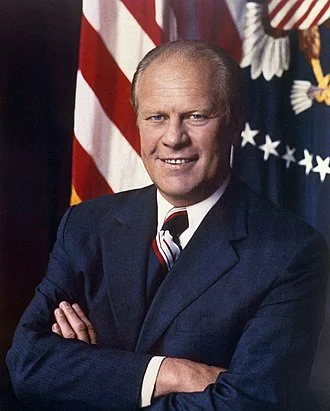
Gerald Ford
Born14 Jul, 1913
Died26 Dec, 2006
NationalityAmerican
Age at time of death93
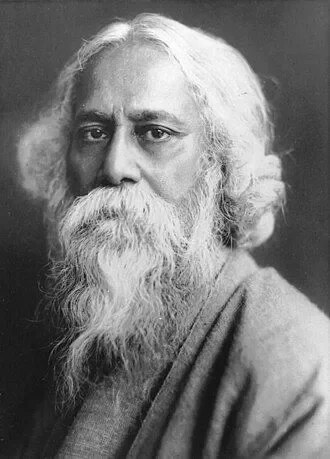
Rabindranath Tagore
Born07 May, 1861
Died08 Aug, 1941
NationalityIndian
Age at time of death80
Cicely Saunders
Born22 Jun, 1918
Died14 Jul, 2005
NationalityEnglish
Age at time of death87
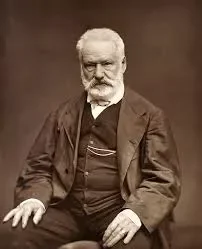
Victor Hugo
Born26 Feb, 1802
Died22 May, 1885
NationalityFrench
Age at time of death83
Joseph Pilates
Born09 Dec, 1883
Died09 Oct, 1967
NationalityGerman
Age at time of death83
George Murphy
Born04 Jul, 1902
Died03 May, 1992
NationalityAmerican
Age at time of death89
P. T. Barnum
Born05 Jul, 1810
Died07 Apr, 1891
NationalityAmerican
Age at time of death80
Mark Twain
Born30 Nov, 1835
Died21 Apr, 1910
NationalityAmerican
Age at time of death74
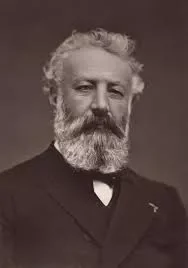
Jules Verne
Born08 Feb, 1828
Died24 Mar, 1905
NationalityFrench
Age at time of death77
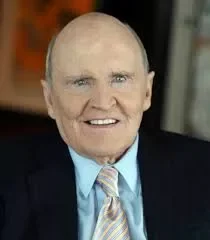
Jack Welch
Born19 Nov, 1935
Died01 Mar, 2020
NationalityAmerican
Age at time of death84
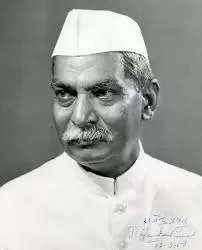
Rajendra Prasad
Born03 Dec, 1884
Died28 Feb, 1963
NationalityIndian
Age at time of death78
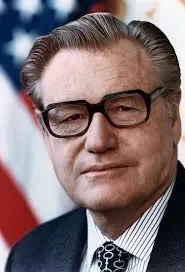
Nelson Rockefeller
Born08 Jul, 1908
Died26 Jan, 1979
NationalityAmerican
Age at time of death70
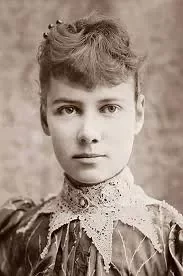
Nellie Bly
Born05 May, 1864
Died27 Jan, 1922
NationalityAmerican
Age at time of death57
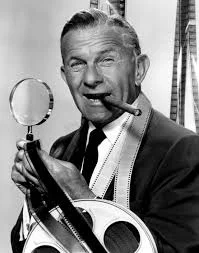
George Burns
Born20 Jan, 1896
Died09 Mar, 1996
NationalityAmerican
Age at time of death100

Ethan Allen
Born21 Jan, 1738
Died12 Feb, 1789
NationalityAmerican
Age at time of death51
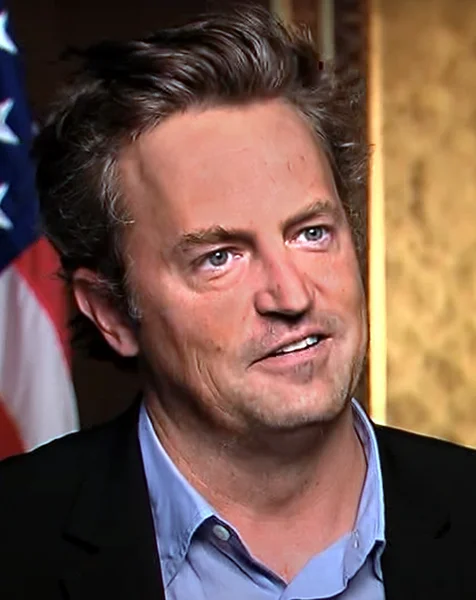
Matthew Perry
Born19 Aug, 1969
Died28 Oct, 2023
NationalityAmerican, Canadian
Age at time of death54
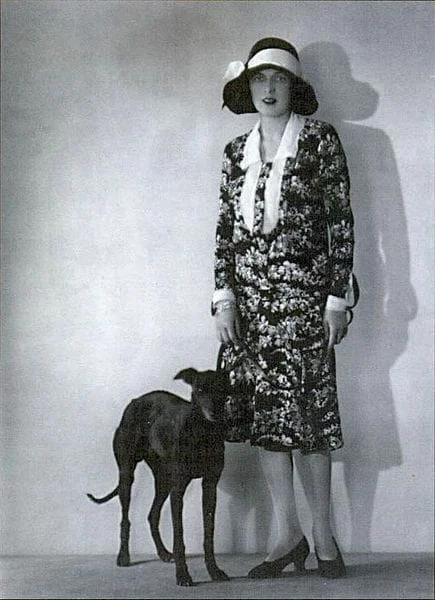
Caresse Crosby
Born20 Apr, 1891
Died24 Jan, 1970
NationalityAmerican
Age at time of death78