Real Celebrities Never Die!
OR
Search For Past Celebrities Whose Birthday You Share
Died Age: 95
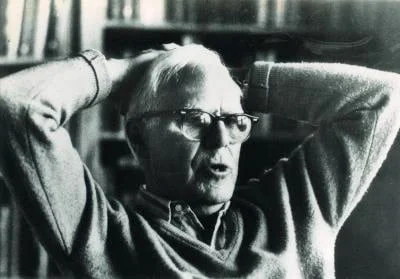
source:wikipedia.org
Martin Gardner
Birthday:
21 Oct, 1914
Date of Death:
22 May, 2010
Cause of death:
Natural causes
Nationality:
American
Famous As:
Author
Age at the time of death:
95
Martin Gardner's Quote's
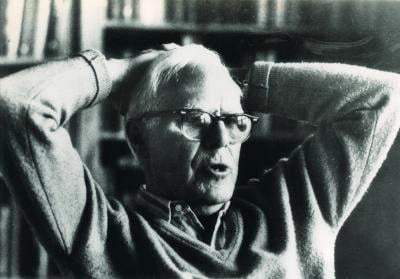
“Mathematics is not only real, but it is the only reality.”
Martin Gardner
🔗 deadcelebrityhub.com
Early Life and Intellectual Curiosity
Martin Gardner, born on October 21, 1914, in Tulsa, Oklahoma, had a deep passion for puzzles and intellectual challenges. His early interest in solving problems shaped his future pursuits in mathematics and science. He spent much of his youth exploring games and puzzles, which later influenced his career.
University of Chicago and Academic Interests
In 1932, Gardner attended the University of Chicago to study philosophy. Though initially focused on philosophy, he soon became drawn to mathematics. This shift ignited his lifelong fascination with the relationship between math and philosophy. Even though he didn’t earn a degree, his time at the university broadened his intellectual horizons.
Professional Career at Scientific American
Gardner’s career took off in 1956 when he began writing the popular “Mathematical Games” column for *Scientific American*. His ability to simplify complex mathematical concepts, making them enjoyable and understandable, attracted readers of all ages. This column cemented his reputation as a skilled communicator of mathematics.
Critical Thinking and Skepticism
A notable part of Gardner’s legacy lies in his promotion of critical thinking. In 1952, he published *Fads and Fallacies in the Name of Science*, which debunked pseudoscience and encouraged rational thought. Gardner’s influence on the skeptical movement helped shape public attitudes toward science and skepticism.
Wide-Ranging Writing Career
Gardner’s talents extended beyond mathematics. He wrote over 100 books, tackling subjects like magic, philosophy, and literature. His work on Lewis Carroll’s *Alice’s Adventures in Wonderland* showed his expertise in diverse fields. His ability to blend intellectual depth with clarity and humor made him an influential figure.
Passion for Magic and Illusions
Gardner was also a skilled magician, a hobby he developed early in life. His expertise in magic enriched his understanding of human psychology and deception, and he often used this knowledge in his writing. His insights into illusions gave his work a unique perspective that set him apart from other writers.
Personal Qualities and Humility
Despite his numerous achievements, Gardner remained humble and approachable. Known for his kindness and generosity, he actively engaged with his readers. His modesty and warm nature made him beloved by many who admired not only his intellect but also his personality.
Award and Recognition
Over the course of his life, Gardner received many honors. In 1999, he was awarded the Lester R. Ford Award for his distinguished contributions to mathematical writing. He also earned multiple honorary degrees, solidifying his position as a respected figure in mathematics and literature.
Legacy and Influence
Gardner passed away on May 22, 2010, but his legacy endures. His work continues to inspire new generations of thinkers and problem solvers. His ability to bridge intellectual rigor with accessible writing keeps his influence alive. Many credit Gardner with sparking their interest in mathematics, skepticism, and critical thinking.
Martin Gardner was a unique intellectual who contributed to multiple fields. His endless curiosity, sharp intellect, and talent for communication made him a truly exceptional figure. His impact on mathematics, science, and literature continues to inspire countless individuals.
Profile Snapshot
Name:
Martin Gardner
Popular Name:
Martin Gardner
Gender:
Male
Cause of Death:
Natural causes
Spouse:
Charlotte Greenwald
Place of Birth:
Tulsa, Oklahoma, U.S.
Place of Death:
Norman, Oklahoma, U.S.
Occupation / Profession:
Author
Personality Type
Adventurer: Flexible and charming artists, always ready to explore and experience something new. He was always interested in exploring new things.
Martin Gardner's Interesting Facts
He is known as one of the Most Important Magicians of the 20th Century
He wrote more than 100 books
Martin had no formal education in mathematics beyond high school
Achievements & Awards
Allendoerfer Award
George Pólya Award
Leroy P. Steele Prize for Mathematical Exposition
Trevor Evans Award
External Links
Latest Profiles
People also viewed
Eva Crane
Born12 Jun, 1912
Died06 Sep, 2007
NationalityBritish
Age at time of death95
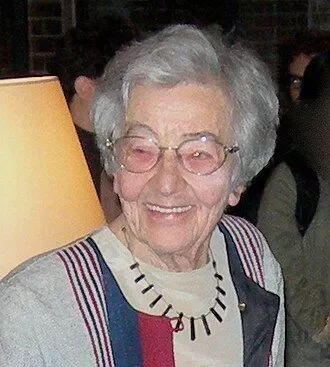
Ursula Franklin
Born16 Sep, 1921
Died22 Jul, 2016
NationalityGerman, Canadian
Age at time of death94
Phyllis Diller
Born17 Jul, 1917
Died20 Aug, 2012
NationalityAmerican
Age at time of death95

Lily Ebert
Born29 Dec, 1923
Died09 Oct, 2024
NationalityHungarian, British
Age at time of death100
Jonas Cohn
Born01 Dec, 1869
Died28 Jan, 1947
NationalityGerman
Age at time of death77
Richard Feynman
Born11 May, 1918
Died15 Feb, 1988
NationalityAmerican
Age at time of death69

Marshall Brain
Born17 May, 1961
Died20 Nov, 2024
NationalityAmerican
Age at time of death63

Tina Turner
Born26 Nov, 1939
Died24 May, 2023
NationalityAfrican, American
Age at time of death83
Eric Morecambe
Born14 May, 1926
Died28 May, 1984
NationalityBritish
Age at time of death58
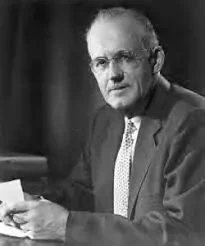
A. W. Tozer
Born21 Apr, 1897
Died12 May, 1963
NationalityAmerican, Canadian
Age at time of death66
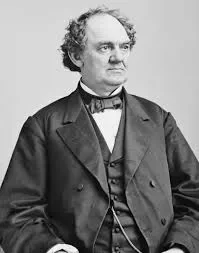
P. T. Barnum
Born05 Jul, 1810
Died07 Apr, 1891
NationalityAmerican
Age at time of death80
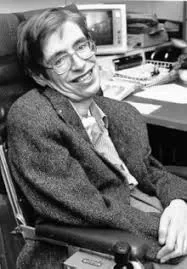
Stephen Hawking
Born08 Jan, 1942
Died14 Mar, 2018
NationalityEnglish
Age at time of death76
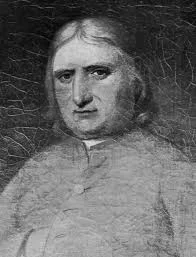
George Fox
Born04 Jul, 1624
Died13 Jan, 1691
NationalityEnglish
Age at time of death66
Albert Hofmann
Born11 Jan, 1906
Died29 Apr, 2008
NationalitySwiss
Age at time of death102
Herbert Hoover
Born10 Aug, 1874
Died20 Oct, 1964
NationalityAmerican
Age at time of death90

Jade Goody
Born05 Jun, 1981
Died22 Mar, 2009
NationalityBritish
Age at time of death27

Dave Myers
Born08 Sep, 1967
Died28 Feb, 2024
NationalityBritish
Age at time of death56

Larry King
Born19 Nov, 1933
Died23 Jan, 2021
NationalityAmerican
Age at time of death87

Ruth Wakefield
Born17 Jun, 1903
Died10 Jan, 1977
NationalityAmerican
Age at time of death73
Carolyn Keene
Born20 Oct, 1925
Died28 May, 2002
NationalityAmerican
Age at time of death76