Real Celebrities Never Die!
Enter your birthday to meet your past celebrity birthday twins.
OR
Died Age: 84
cinemaescapist.com
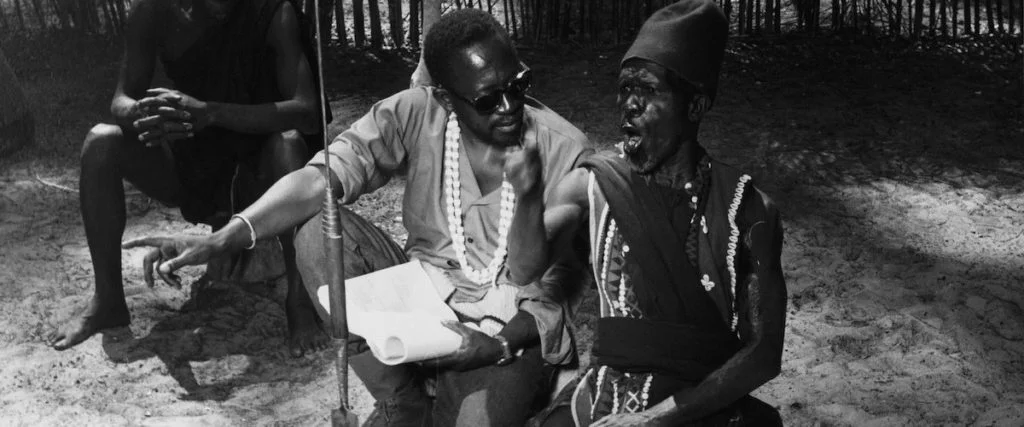
Ousmane Sembène
Birthday:
01 Jan, 1923
Date of Death:
09 Jun, 2007
Cause of death:
Illness
Nationality:
Senegalese
Famous As:
Producer
Age at the time of death:
84
Ousmane Sembène's Quote's

“Bread came wrapped in French newspapers. Each time my father unwrapped a baguette, he asked me to read to him.”
Ousmane Sembène
🔗 deadcelebrityhub.com
Early Life: Forged by Struggle, Formed by Resistance
Ousmane Sembène didn’t just tell stories—he gave voice to the silenced. A dockworker turned novelist, and then Africa’s first great filmmaker, Sembène used art as a weapon against colonialism, inequality, and ignorance. He believed that cinema could reach where the written word could not, and through his films, he held up a mirror to Senegalese society—and to the entire postcolonial world. Bold, uncompromising, and visionary, he didn’t just make movies; he sparked conversations, provoked thought, and awakened nations.
Born on January 1, 1923, in the coastal town of Ziguinchor in southern Senegal, Ousmane Sembène grew up in a working-class Lebou family. His father was a fisherman, and the young Ousmane absorbed the rhythms of local oral traditions and Islamic teachings, along with the realities of colonial rule under the French. He was expelled from school at the age of 14 after punching a teacher—a defiant act that foreshadowed the rebellious spirit that would define his life.
After leaving formal education, Sembène worked various jobs—mechanic, bricklayer, fisherman—before being drafted into the French army during World War II. Later, as a dockworker in Marseille, he became involved in labor activism and radical politics, reading voraciously and discovering the power of Marxism and literature.
Trivia: While working on the docks in France, he injured his back, which helped push him toward writing—first out of necessity, then out of conviction.
Education: A Self-Taught Revolutionary
Though Sembène lacked formal higher education, his intellectual hunger was insatiable. In Marseille, he immersed himself in the works of Marx, Lenin, and Aimé Césaire. He also studied film at the Gorky Film Studio in Moscow in the early 1960s, an unusual and formative experience that sharpened his cinematic eye.
Books were his first weapon—his debut novel, Le Docker Noir (The Black Docker), published in 1956, was inspired by his own experiences of racism and exploitation in France. But he soon realized that literature in French couldn’t reach the everyday Senegalese citizen.
“If Africans can’t read my books,” he said, “I will film them.”
Career Journey: From the Pen to the Lens
Early Career: The Writer Emerges
Sembène’s early novels—O Pays, mon beau peuple! (1957), Les Bouts de bois de Dieu (1960)—captured the spirit of African workers and the injustice of colonial systems. Les Bouts de bois de Dieu (translated as God’s Bits of Wood) chronicled a 1947–48 railway strike and remains one of the greatest African novels of the 20th century.
But while critics in Europe applauded his literary talent, Sembène saw that books alone couldn’t reach the masses back home—many of whom were illiterate. He decided to pivot to film, aiming to bring his political vision to village squares, town markets, and makeshift outdoor cinemas.
Pioneering African Cinema: The Birth of a Medium
In 1966, Sembène released La Noire de… (Black Girl), the first African feature film by a sub-Saharan African. Based on a short story he had written, the film tells the tragic tale of a Senegalese woman who moves to France as a domestic worker and falls into despair. Stark, haunting, and laced with social critique, the film won international awards and announced Sembène as a bold new voice in cinema.
Over the next four decades, he created a body of work that tackled colonialism, religious hypocrisy, gender oppression, and corruption. Films like Xala (1975), Ceddo (1977), and Guelwaar (1992) dared to critique both the legacy of Western imperialism and the failures of post-independence African leadership.
He often shot in Wolof, his native language, to reach local audiences directly, and cast nonprofessional actors to enhance authenticity.
Trivia: Ceddo was banned in Senegal for years due to its controversial depiction of Islam’s influence on traditional African culture.
Later Works and Recognition
In 2004, well into his eighties, Sembène released what many consider his final masterpiece: Moolaadé, a powerful film condemning female genital mutilation. It won the Un Certain Regard award at the Cannes Film Festival and affirmed Sembène’s legacy as a fearless voice for justice—especially for African women.
Personal Life: The Stoic Storyteller
Sembène lived much of his later life modestly in Dakar, where he mentored younger filmmakers and continued to write. Though known for his fierce convictions, he was also a warm, dry-witted man who loved storytelling in all its forms—from traditional griot tales to Soviet cinema.
He was a deeply Pan-African thinker, seeing cinema not as entertainment, but as a form of social education. While he never married publicly nor discussed his private life in depth, his life’s partner was arguably his art—and the people it aimed to serve.
Legacy: Africa’s Griot with a Camera
When Ousmane Sembène died on June 9, 2007, tributes poured in from across the globe. More than an artist, he was a cultural liberator—one who used his camera as a tool for emancipation.
Often called the “father of African cinema,” Sembène inspired an entire generation of filmmakers across the continent and diaspora. He showed that Africa could tell its own stories, challenge its own flaws, and celebrate its own truths—all without Western validation.
In a world saturated with noise, Sembène’s voice still cuts through: clear, grounded, unafraid.
Trivia: In Wolof tradition, a griot is a storyteller and oral historian. Sembène modernized the role—becoming, as he once called himself, “a griot with a camera.”
Conclusion: The Conscience of African Cinema
Ousmane Sembène lived not for fame, but for truth. He believed that art must serve the people—not just entertain them. In a world that tried to silence African voices, he shouted back with celluloid, pen, and principle. He did not ask permission to tell the truth. He simply told it.
His legacy lives on in every African filmmaker who dares to tell an uncomfortable story, in every audience member who sees themselves on screen, and in every community sparked into conversation by a reel of film flickering under an open sky.
Sembène did not just make movies. He made history.
Profile Snapshot
Name:
Ousmane Sembène
Popular Name:
Ousmane Sembène
Gender:
Male
Cause of Death:
Illness
Spouse:
Carrie Moore
Place of Birth:
Ziguinchor, Casamance, French West Africa
Place of Death:
Dakar, Senegal
Occupation / Profession:
Producer
Senegalese film director
Writer
Personality Type
Advocate: Ousmane Sembène was a visionary and principled storyteller, driven by a deep sense of justice and a commitment to using art as a tool for cultural awakening and social change.
Ousmane Sembène's Interesting Facts
His 1966 film La Noire de... (Black Girl) is considered the first feature film made by a sub-Saharan African filmmaker to gain international recognition.
In addition to filmmaking, Sembène was a writer and activist, publishing novels and short stories that furthered his mission to bring African stories to global audiences.
Ousmane Sembène was a Senegalese film director, producer, and writer, often called the "father of African cinema" for his role in shaping the African film industry.
Sembène used his films to address important social and political issues, often focusing on themes of colonialism, gender inequality, and poverty in Africa.
Achievements & Awards
He was also honored with the Grand Prix at the Cannes Film Festival for his groundbreaking contributions to African film and culture.
Ousmane Sembène, known as the "father of African cinema," received numerous accolades for his pioneering work, including the Pardo d'Oro at the Locarno Film Festival for Moolaadé (2004).
External Links
Latest Profiles
People also viewed
July 11, 1899
Born11 Jul, 1899
Died01 Oct, 1985
NationalityAmerican
Age at time of death86
George Harrison
Born25 Feb, 1943
Died29 Nov, 2001
NationalityBritish
Age at time of death58
Dale Carnegie
Born24 Nov, 1888
Died01 Nov, 1955
NationalityAmerican
Age at time of death66
Zora Neale Hurston
Born07 Jan, 1891
Died28 Jan, 1960
NationalityAmerican
Age at time of death69
Rabindranath Tagore
Born07 May, 1861
Died08 Aug, 1941
NationalityIndian
Age at time of death80
Cicely Saunders
Born22 Jun, 1918
Died14 Jul, 2005
NationalityEnglish
Age at time of death87
Joseph Pilates
Born09 Dec, 1883
Died09 Oct, 1967
NationalityGerman
Age at time of death83
Frank Sinatra
Born12 Dec, 1915
Died14 May, 1998
NationalityAmerican
Age at time of death82
Mark Twain
Born30 Nov, 1835
Died21 Apr, 1910
NationalityAmerican
Age at time of death74
Alfred Hitchcock
Born13 Aug, 1899
Died29 Apr, 1980
NationalityAmerican, British
Age at time of death80
Stanley Kubrick
Born26 Jul, 1928
Died07 Mar, 1999
NationalityAmerican, British
Age at time of death70
Keith Martin
Born22 Sep, 1966
Died25 Mar, 2022
NationalityAmerican
Age at time of death55
Jules Verne
Born08 Feb, 1828
Died24 Mar, 1905
NationalityFrench
Age at time of death77
Jack Welch
Born19 Nov, 1935
Died01 Mar, 2020
NationalityAmerican
Age at time of death84
Whitney Houston
Born09 Aug, 1963
Died11 Feb, 2012
NationalityAmerican
Age at time of death48
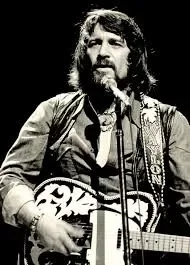
Waylon Jennings
Born15 Jun, 1937
Died13 Feb, 2002
NationalityAmerican
Age at time of death64
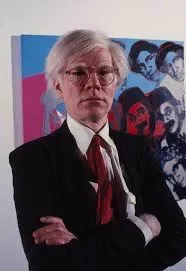
Andy Warhol
Born06 Aug, 1928
Died22 Feb, 1987
NationalityAmerican
Age at time of death58
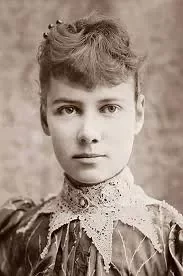
Nellie Bly
Born05 May, 1864
Died27 Jan, 1922
NationalityAmerican
Age at time of death57
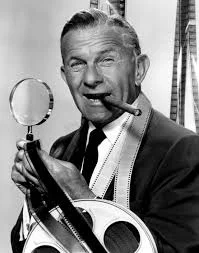
George Burns
Born20 Jan, 1896
Died09 Mar, 1996
NationalityAmerican
Age at time of death100

Ethan Allen
Born21 Jan, 1738
Died12 Feb, 1789
NationalityAmerican
Age at time of death51