Real Celebrities Never Die!
Enter your birthday to meet your past celebrity birthday twins.
OR
Died Age: 83
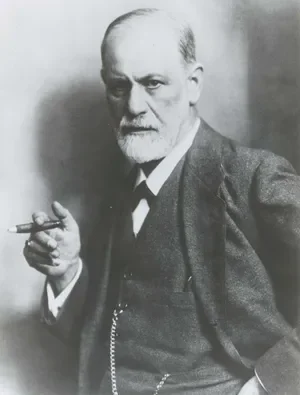
britannica.com
Sigmund Freud
Birthday:
05 May, 1856
Date of Death:
23 Sep, 1939
Cause of death:
Cancer of Jaw
Nationality:
Austrian
Famous As:
Austrian neurologist
Age at the time of death:
83
Sigismund Schlomo Freud's Quote's

“If a man has been his mother's undisputed darling, he retains throughout life the triumphant feeling, the confidence in success, which not seldom brings actual success along with it.”
Sigismund Schlomo Freud
🔗 deadcelebrityhub.com
Early Life: Born to Question
Rebel, thinker, and revolutionary—Sigmund Freud was a man unafraid to peer into the shadows of the human psyche. At a time when mental illness was feared and misunderstood, Freud had the audacity to ask not just what people think, but why. He gave us the language of the unconscious, the architecture of dreams, and the framework of modern psychology. More than a doctor, Freud was a cartographer of the soul—and his map continues to shape how we see ourselves.
Sigmund Freud was born on May 6, 1856, in Freiberg, in the Austrian Empire (now the Czech Republic), to Jacob Freud, a wool merchant, and Amalia, his third and much younger wife. From the outset, young Sigmund was marked out for something unusual—his mother lovingly called him “my golden Siggie,” and his intellect was obvious from a young age.
When the family moved to Vienna while Freud was still a child, he was introduced to a world of intellectual richness and social complexity. His upbringing, marked by both doting affection and strict Jewish traditions, planted early seeds of inner conflict—tensions that would later form the foundation of his theories about desire, repression, and identity.
Education: A Scientific Mind Meets the Human Mystery
Freud enrolled at the University of Vienna at the age of 17 to study medicine, originally drawn to neurophysiology and research. He worked in the lab of Ernst Brücke, studying the anatomy of the brain and the nervous system with meticulous care. However, despite his passion for the biological sciences, Freud was increasingly drawn to questions that biology alone couldn’t answer: Why do people dream? What causes neurosis? Why do patients suffer with no clear physical cause?
He earned his medical degree in 1881, and his early career was deeply rooted in research. But the mysteries of the human mind—and his encounters with patients suffering from “nervous disorders”—pushed him beyond anatomy into the uncharted realm of the psyche.
Career Journey: Building the Foundation of Psychoanalysis
The Birth of a New Science
In the late 1880s, Freud began experimenting with hypnosis alongside his colleague Josef Breuer, treating patients suffering from hysteria. Together they developed the “talking cure,” in which patients would speak freely to uncover repressed memories and traumas. This technique would evolve into psychoanalysis.
Freud believed that much of human behavior was influenced not by conscious thought but by unconscious desires, often sexual or aggressive in nature. His concept of the id, ego, and superego provided a dynamic model for understanding the mind’s internal battles.
In 1900, he published The Interpretation of Dreams, a groundbreaking work that introduced the idea that dreams are a window into the unconscious. It was bold, controversial, and radically original—and it set the stage for a new discipline entirely.
Controversy and Influence
Freud’s theories—such as the Oedipus complex, repression, and penis envy—sparked outrage in polite society and academia alike. Yet his influence only grew. By the early 20th century, he had formed a circle of like-minded thinkers in what became known as the Vienna Psychoanalytic Society.
Despite falling out with key disciples like Carl Jung (who found Freud too fixated on sexuality), Freud remained the central figure of the psychoanalytic movement. His writing was both scientific and literary, blending case studies, mythology, and philosophy.
Fun Fact: Freud was a passionate cigar smoker and believed tobacco enhanced his thinking—despite the fact that he later developed jaw cancer and underwent over 30 operations.
Personal Life: A Private Man with Public Ideas
Freud married Martha Bernays in 1886, and together they had six children, including Anna Freud, who would later become a prominent psychoanalyst herself. Though intensely private, Freud’s letters reveal a man of great emotional depth—loyal to his family, deeply introspective, and prone to melancholy.
He maintained close friendships and fierce rivalries, and his correspondence with contemporaries such as Jung, Wilhelm Fliess, and Lou Andreas-Salomé offer insight into the complexity of his inner world. For a man who sought to uncover the unconscious in others, he guarded his own closely.
Legacy: The Father of Psychoanalysis
Freud fled Nazi-occupied Austria in 1938, settling in London, where he died the following year at age 83. But his ideas didn’t die with him. Today, Freud is both celebrated and critiqued—some of his theories have been revised or debunked, but his influence on psychology, literature, art, film, and culture remains immense.
Terms like Freudian slip, defense mechanisms, and the unconscious mind are now embedded in everyday language. He gave people a framework to understand anxiety, trauma, and dreams—not as signs of madness, but as meaningful expressions of the self.
Freud changed how we see ourselves: not as purely rational beings, but as complex creatures driven by unseen forces. He dared to go where few had gone before—into the tangled wilderness of the human mind—and returned with a vocabulary that shaped the modern age.
Conclusion: A Mind That Mapped the Mind
Sigmund Freud didn’t just find discipline—he started a conversation that still hasn’t ended. He was fearless in his pursuit of truth, even when that truth was uncomfortable. To some, he was a genius. To others, a provocateur. But few dispute that he was one of the most original thinkers of the 20th century.
By decoding dreams, revealing unconscious desires, and challenging taboos, Freud didn’t just explore the mind—he expanded it.
Profile Snapshot
Name:
Sigismund Schlomo Freud
Popular Name:
Sigmund Freud
Gender:
Male
Cause of Death:
Cancer of Jaw
Spouse:
Martha Bernays
Place of Birth:
Freiberg in Mähren, Moravia, Austrian Empire (now Příbor, Czechia)
Place of Death:
Hampstead, London, England
Occupation / Profession:
Austrian neurologist
Personality Type
Logician: Sigmund Freud was an innovative and highly analytical thinker, driven by a deep curiosity about the human mind, and always seeking to explore complex theories with intellectual rigor.
Sigismund Schlomo Freud's Interesting Facts
Despite fleeing Nazi-occupied Austria in 1938 due to his Jewish heritage, he continued his work in London until his death in 1939.
Freud’s work was controversial in his time but had a massive influence on psychology, literature, art, and popular culture.
He introduced key psychological concepts like the unconscious mind, defense mechanisms, and the Oedipus complex.
Sigmund Freud was the founder of psychoanalysis, a groundbreaking method for treating mental illness through dialogue between patient and therapist.
Achievements & Awards
He was honored with the Goethe Prize in 1930 for his contributions to literature and intellectual thought, and his legacy continues to influence psychology and culture worldwide.
Sigmund Freud, the father of psychoanalysis, didn’t receive many formal awards during his lifetime, but his groundbreaking theories on the unconscious mind, dreams, and human behavior revolutionized psychology.