Real Celebrities Never Die!
OR
Search For Past Celebrities Whose Birthday You Share
Died Age: 75
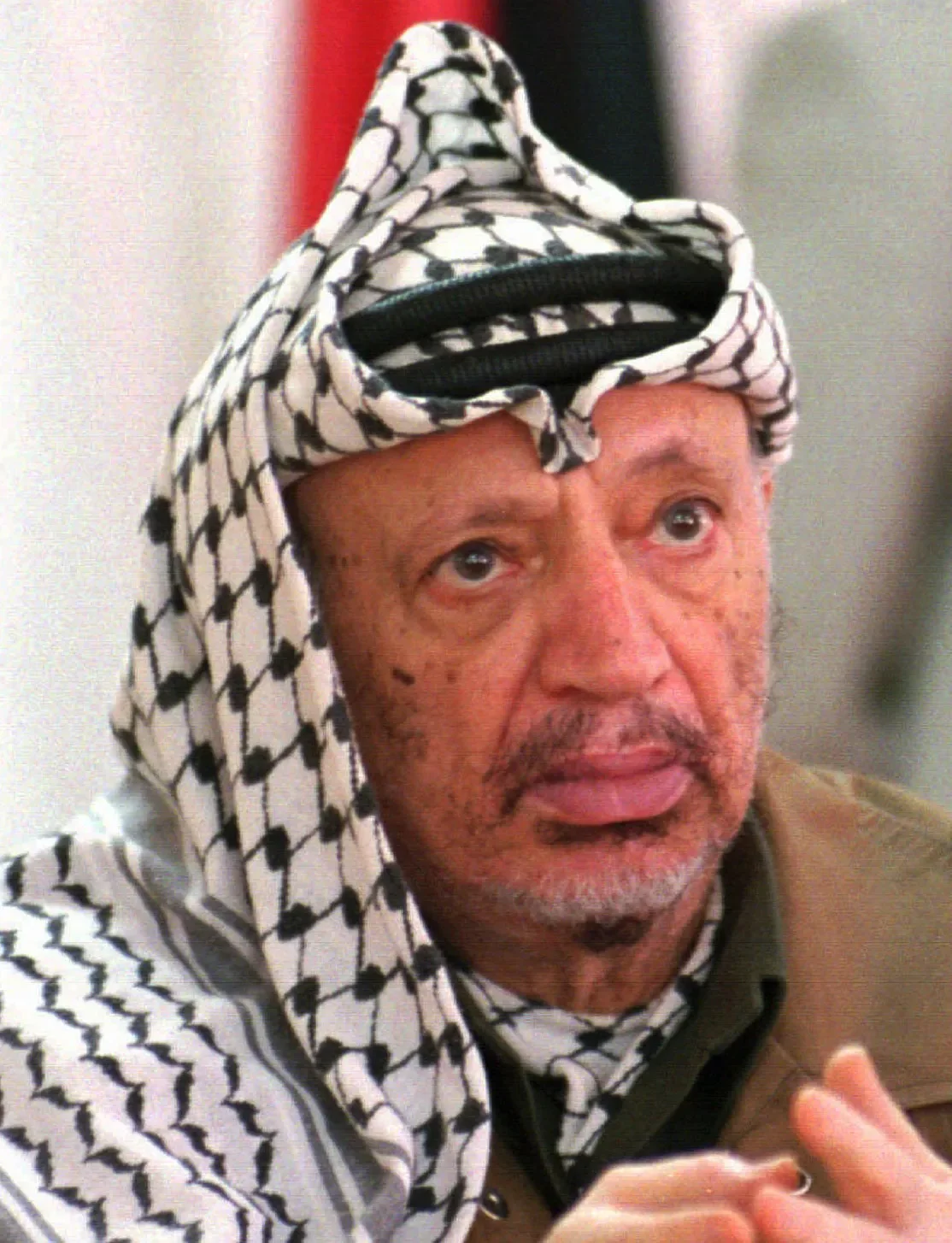
source:britannica.com
Yasser Arafat
Birthday:
24 Aug, 1929
Date of Death:
11 Nov, 2004
Cause of death:
Natural causes
Nationality:
Palestinian
Famous As:
Political leader
Age at the time of death:
75
Yasser Arafat's Quote's

“Whoever stands by a just cause cannot possibly be called a terrorist.”
Yasser Arafat
🔗 deadcelebrityhub.com
Early Life and Family Background
Mohammed Abdel Rahman Abdel Raouf Arafat al-Qudwa al-Husseini, popularly known as Yasser Arafat, was a Palestinian political leader and a prominent figure in the Israeli-Palestinian conflict. He was born on August 24, 1929, in Cairo, Egypt, but spent much of his life in Palestine. His father, Abdel Raouf al-Qudwa al-Husseini, was a textile merchant from Gaza City, and his mother, Zahwa Abul Saud, came from Jerusalem. Arafat’s mother passed away from kidney illness when he was only 4 years old. During his early years, he lived between Cairo and Jerusalem, attending various schools in Cairo during his childhood and teenage years.
Education and Early Political Involvement
Yasser Arafat studied engineering at the University of King Fuad I. During his university years, he became involved in Arab nationalist and anti-colonialist movements. These political interests eventually led him to leave his studies before completing his degree. Arafat became deeply devoted to the Palestinian cause, dedicating his life to political activism.
Founding of Fatah and Rise to Leadership
In the 1950s, Arafat co-founded Fatah, an organization aimed at reclaiming Palestinian land and establishing an independent Palestinian state. Fatah’s primary goal was to counter Israeli occupation and advocate for Palestinian self-determination. In 1964, Fatah joined the Palestine Liberation Organization (PLO), a coalition of political and military groups representing the Palestinian people. Under Arafat’s leadership, the PLO engaged in armed resistance against Israel, including guerrilla warfare during the 1960s.
Diplomatic Efforts and International Recognition
Arafat’s leadership brought international attention to the Palestinian cause. In 1974, he addressed the United Nations as a representative of the Palestinian people, famously holding an olive branch as a symbol of peace. His speech emphasized the Palestinian struggle for self-determination, statehood, and the rights of refugees, further solidifying his role as a global figure.
Oslo Peace Accords and the Nobel Peace Prize
In 1993, Arafat participated in the Oslo Peace Accords, marking the first direct negotiations between the PLO and Israel. These accords were seen as a significant step toward resolving the Israeli-Palestinian conflict. In 1994, Arafat, alongside Israeli Prime Minister Yitzhak Rabin, received the Nobel Peace Prize for their efforts toward peace. That same year, Arafat became the President of the Palestinian Authority, a position he held until his death.
Death and Legacy
Yasser Arafat passed away on November 11, 2004, at the age of 75, due to a massive hemorrhagic cerebrovascular accident. He died at a military hospital in Clamart, France. Following his death, Palestine observed a period of mourning, with 40 days of official mourning declared by the Palestinian Authority in Lebanon. Arafat’s leadership was both celebrated and criticized, as his methods and the PLO’s history of violence led to mixed opinions about his legacy.
Impact on the Palestinian Cause
Despite the controversies surrounding him, Arafat’s leadership and political efforts brought international attention to the Palestinian struggle. He played a crucial role in advocating for Palestinian statehood and self-determination. His death marked the end of a significant political era for Palestine, and his influence continues to shape discussions about the Israeli-Palestinian conflict.
Yasser Arafat passed away on November 11, 2004, due to a massive hemorrhagic cerebrovascular accident, at the age of 75. He died at a military hospital in Clamart, a suburb of Paris, France. After Arafat’s death was announced, the people of Palestine went into mourning, with Qur’anic mourning prayers from the mosque. The Palestinian Authority in Lebanon declared 40 days of mourning for his death. During his career, he faced criticism from Israelis and Palestinians as they viewed him as a terrorist due to PLO’s history of violence. His death was the end of a political era in Palestine and his death was mourned by many. Throughout his life, Arafat’s leadership and political skills shaped him in solving the Palestinian issue on the international stage.
Profile Snapshot
Name:
Yasser Arafat
Popular Name:
Yasser Arafat
Gender:
Male
Cause of Death:
Natural causes
Spouse:
Suha Arafat
Place of Birth:
Cairo, Egypt
Place of Death:
Clamart, Hauts-de-Seine, France
Occupation / Profession:
Political leader
Personality Type
Defender: Very dedicated and warm protectors, always ready to defend their loved ones. He always stood up for the Palestinians, no matter the cost or difficulty of the challenge.
Yasser Arafat's Interesting Facts
He supported Iraqi leader Saddam Hussein during the Gulf War.
His nickname Yasir or Yasser means “easy-going” in Arabic.
Yasser Arafat survived a plane crash in Libya that kills the pilot and two others.
Achievements & Awards
Nobel Prize for Peace